
EDUCATION
Alausa faults university accreditation system, seeks reform

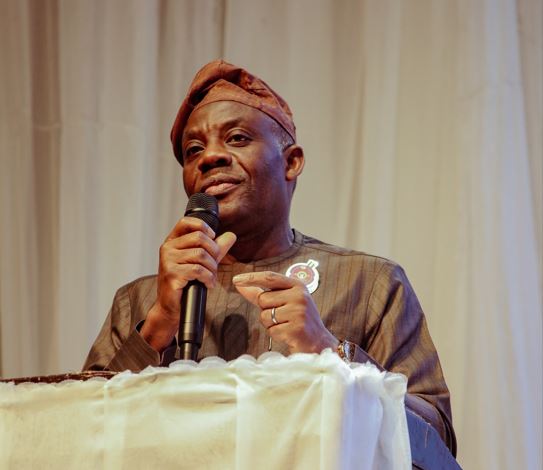

The Minister of Education, Dr Tunji Alausa, has called for urgent reforms in Nigeria’s university accreditation system, calling the current process ‘chaotic, costly, and counterproductive’ to educational access and quality.
Speaking at a meeting with professional bodies on Thursday in Abuja, Alausa criticised the overlapping roles of more than 25 accrediting organisations, saying they burden universities with conflicting requirements, high costs, and logistical challenges.
“As we modernise, we must not abuse the system. Accreditation should not be a business that enriches a few while complicating the entire system,” he said.
He expressed concern that universities are compelled to bear the costs of accreditation visits, including travel, accommodation, and allowances for visiting teams.
“If you want to accredit, go and accredit. It’s not the university’s duty to fund your process,” he said.
While acknowledging the importance of professional oversight in critical disciplines, the minister noted that accreditation of academic programmes remains the statutory responsibility of the National Universities Commission (NUC).
He traced the growth in accrediting bodies from just seven councils five decades ago to the present, warning that the proliferation now hampers access and institutional growth.
“Access is no longer the major challenge, capacity is. These burdensome requirements are limiting student intake and reducing access,” he said.
Alausa advocated a standardised accreditation model with a five-year cycle, a two-to-three-day assessment window, and self-funded visits by professional bodies.
Also speaking, the Registrar of the Joint Admissions and Matriculation Board (JAMB), Prof. Ishaq Oloyede, called for a balanced approach that safeguards university autonomy, public funds, and academic standards.
He urged all stakeholders to agree on a unified framework that respects institutional roles.
The Executive Secretary of the NUC, Prof. Abdullahi Ribadu, said the duplication of accreditation roles harms the credibility of Nigeria’s higher education system.
Ribadu shared personal experiences as a former vice-chancellor, where institutions faced conflicting accreditation demands.
“For instance, the NUC may require 60 per cent of teaching staff to have PhDs, while ICAN may disregard that and focus on professional qualifications,” he said.
He called for a harmonised national approach, citing international best practices where professional bodies and universities collaborate or clearly define responsibilities.
Responding, Prof. Zacheus Opafunso, Registrar/CEO of the Council of Nigerian Mining Engineers and Geoscientists (COMEG), said professional bodies play a distinct and essential role in regulating qualifications in their respective fields and should be allowed to conduct accreditation.


NIGERIA DECIDES

 Davido's Net Worth & Lifestyle
