
News
Tajudeen tasks African nations on job creation, prudent financial mgt.

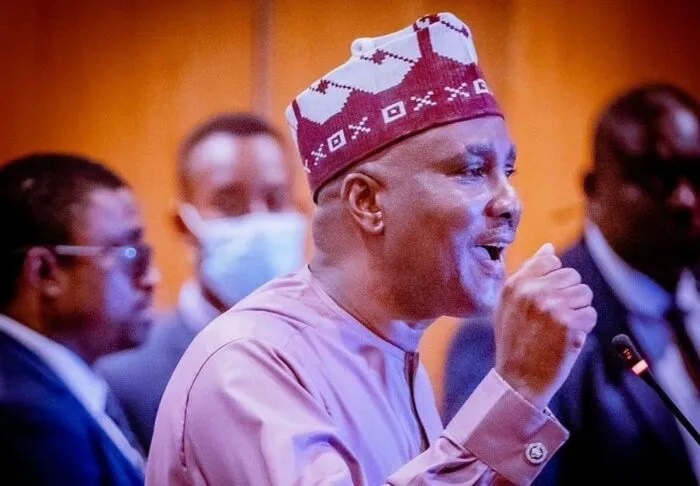

The Speaker of the House of Representatives, Abbas Tajudeen has tasked African nations on job creation and revenue blockage, to secure the economic future of the continent.
Tajudeen gave the charge on at the opening of the 8th Annual African Network of Parliamentary Budget Offices (AN-PBO), conference in Abuja.
The theme of the week-long conference is: “The Role of PBOs in African Parliaments’ Fiscal Oversight: Contribution to the African 2063 Development Agenda.”
The conference drew participants from Nigeria, Ghana, South Africa, Kenya, Cape Verde, Gambia, Somalia, Uganda, Mozambique, Sierra Leon, Zimbwabwe, Namibia, Tanzania, Malawi and Liberia.
The speaker said that Africa was at a crucial crossroads in its history with a population of approximately 1.4 billion people, roughly one-sixth of humanity.
The lawmaker said that the African continent was young, growing and brimming with high potentials.
“Nigeria, as Africa’s most populous nation with more than 200 million people and a GDP of around 477 billion dollars in 2022, carries a special responsibility in this African story.
“We are a continent of abundant resources and talented youth and we have bold ambitions captured in the African Union’s Agenda 2063, which serves as the blueprint for the Africa we want.
“However, the path to realising this vision remains difficult,” he said.
According to him, economic growth in Sub-Saharan Africa was recovering, although modestly, with the World Bank projecting an increase from 3.3 per cent in 2024 to 3.5 per cent in 2025.
“This is encouraging, but not yet sufficient to meet our development needs.
“Poverty remains widespread with an estimated 464 million Africans living in extreme poverty as of 2024,” Tajudeen said.
He added that unemployment and underemployment, especially among young people, were urgent issues.
“Each year, 12 million young Africans enter the labour market, yet only around three million formal jobs are created.
“This gap in opportunities highlights a potential demographic dividend that could turn into a demographic risk if we do not take action,” he warned.
Tajudeen said that development strategies in various countries, including national and continental development plans, must be adequately reflected in government budgets and supported by robust oversight.
He said that Africans looked to their parliaments to carefully align public spending with broader development objectives and to consider the voices of constituents in fiscal decision-making.
The speaker said that according to the African Development Bank (ADB), Africa loses more than 587 billion dollars annually to capital flight.
He said that the money fled the continent through corruption, illicit trade, mispricing and profit shifting by multinational corporations, among other channels.
According to him, corruption alone was estimated to drain about 148 billion dollars from Africa annually.
“Other illicit financial flows such as trade malpractices, smuggling, among others, siphon away additional tens of billions of dollars.
“This is money that should be used to build roads in Lagos, equip hospitals in Nairobi, or improve schools in Accra, but instead it vanishes,” he said.
The speaker stated that Nigeria presented a cautionary example of both the challenge and urgency of oversight.
“In our public procurement processes, which make up a significant part of government spending, Nigeria loses an estimated 18 billion dollars each year to financial crimes, roughly 3.8 per cent of our GDP.
“These leaks could fund numerous social programmes many times over; there is a need to stop such leakages so that budgets can lead to better outcomes for citizens,” he said.
He said that this accounted for why the National Assembly has been increasing oversight hearings, audit inquiries and strengthening anti-corruption laws.
“Oversight is vital to ensure that limited resources are used for the public good,” he said.
Tajudeen recommended that African parliaments embrace cutting-edge technology and artificial intelligence (AI) as critical tools of reform.
He said that around the world, parliaments were already demonstrating how data analytics, machine learning and digital platforms can transform budget scrutiny and anti-corruption efforts.
“Nigeria and our sister African countries can no longer rely on outdated manual practices that slow oversight and dilute accountability.
“In our National Assembly today, it is still common for committees to request up to 30 printed copies of documents from Ministries, Departments, and Agencies (MDAs), for budget defence or investigative hearings,” he said.
In his remarks, the Chairperson, AN-PBO Governing Council, Prof. Dumisani Jantjies said that the conference programme was a direct response to these pressing issues.
He said that the conference would confront the global macroeconomic situation; dive deep into Public Debt Management and champion Inclusive and Gender-Responsive Budgeting.
“I am particularly excited about our session on economic modelling, where we will learn powerful tools to transform complex data into strategic foresight.
“Our mission extends beyond technical analysis; we are guardians of fiscal transparency and pillars of democratic accountability,” he said.
Mr Kamorudeen Ogunlana, Clerk of the National Assembly, said that AN-PBO was a critical platform for peer learning, capacity building and promoting the institutionalisation of evidence-based public finance management.
Ogunlana said that the strides made so far were commendable as seen in improved legislative scrutiny, enhanced transparency and an increasingly informed citizenry.
He said that Nigeria had continued to witness the positive impact of National Assembly Budget and Research Office (NABRO), whose technical analysis and objective reporting had become invaluable tools in legislative process.


NIGERIA DECIDES

 Davido's Net Worth & Lifestyle
