
News
Inclusive growth central to Tinubu’s agenda – Presidency

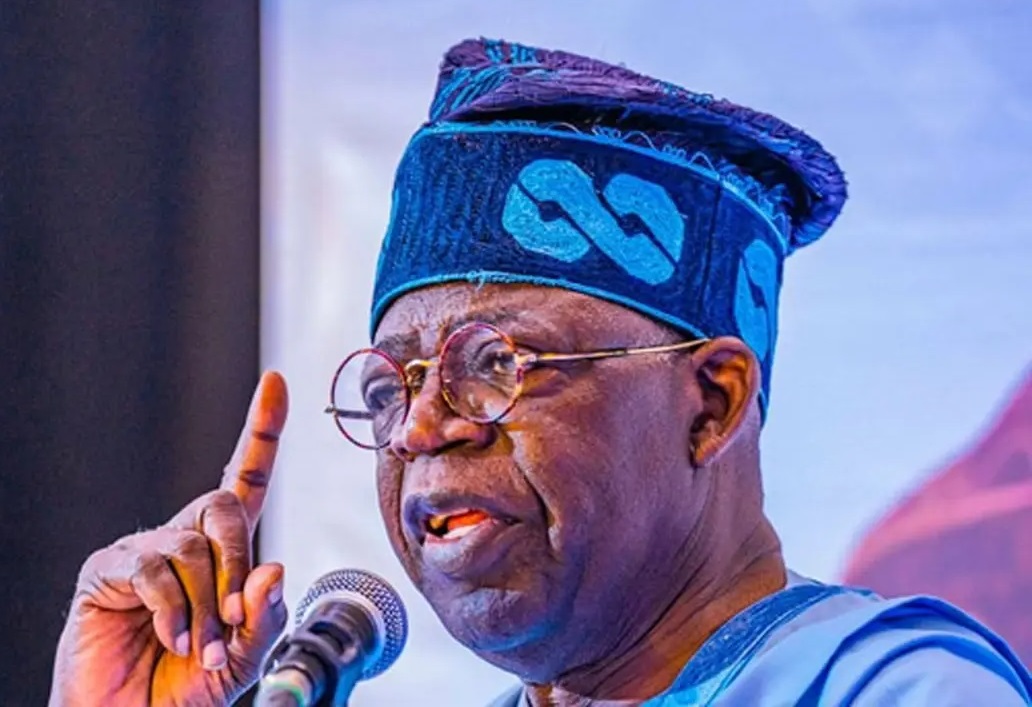

The Presidency has reaffirmed President Bola Tinubu’s commitment to inclusive economic growth and policies aimed at reducing the burden on ordinary Nigerians.
Mr Sunday Dare, Special Adviser to the President on Media and Public Communication, stated this via his verified X account.
His comments follows a recent World Bank Group report noting Nigeria’s persistent poverty levels inspite of rising government revenue and increased capital expenditure.
The Presidency outlined key programmes and reforms supporting economic recovery and enhanced social protection under the Tinubu administration.
Dare stressed the administration’s focus on household welfare through measurable and data-backed interventions.
He identified the Conditional Cash Transfer (CCT) as a flagship initiative, reaching up to 15 million households, with over ₦297 billion disbursed since 2023.
The Renewed Hope Ward Development Programme (RH-WDEP) was also highlighted as “a major initiative targeting all 8,809 electoral wards.”
The programme aims to deliver micro-infrastructure, essential services, and livelihood support directly to grassroots communities.
Dare also noted efforts to consolidate social investment schemes like N-Power, GEEP loans (TraderMoni, MarketMoni, FarmerMoni), and the School Feeding Programme.
These programmes aim to protect jobs, support micro-businesses, and keep children in school.
On food security, Dare said the government is addressing inflation through subsidised grain distribution, fertiliser support, and agricultural mechanisation.
He added that strategic food reserves are being revitalised to stabilise prices and boost supply.
Dare said government investments are also being expanded in agriculture, MSMEs, and power infrastructure to stimulate job creation and reduce living costs.
He noted that the projects include agricultural value chain expansion, gas-to-power initiatives, and skills development hubs nationwide.
“As these programmes mature, Nigerians should begin to feel visible improvements in food prices, income, and purchasing power,” he said.
Dare said a unified, data-driven system is being deployed to ensure transparency and accountability in social investment.
He stressed that the expansion of the National Social Register and full rollout of RH-WDEP aim to include every vulnerable community.
“The reforms are necessary, the direction is right, and the foundation for a fairer and more prosperous Nigeria is being firmly laid,” Dare added.
Our correspondent reports that the world bank on Wednesday said that Nigeria has taken important steps toward stabilising its economy through recent policy reforms.
It said that more needs to be done to ensure these gains translate into better living standards for its citizens, according to the latest Nigeria Development Update (NDU) released by the World Bank today.
Titled “From Policy to People: Bringing the Reform Gains Home,” the report notes progress in economic growth, domestic revenue mobilisation, monetary policy, and external balances—while underscoring persistent challenges such as high food inflation, widespread poverty, and structural barriers that constrain inclusive growth.
“The Nigerian government has taken bold steps to stabilize the economy, and these efforts are beginning to yield results,” said Mathew Verghis, World Bank Country Director for Nigeria.
“But macroeconomic stability alone is not enough. The true measure of success will be how these reforms improve the daily lives of Nigerians—especially the poor and vulnerable.”
To help bridge the gap between macroeconomic progress and improved welfare, the report urged the government to tackle three urgent priorities.
These are tackle food inflation by removing trade barriers such as import bans and excessive duties, while addressing structural bottlenecks in seeds, input supply, security, logistics, and infrastructure (including transport, power, storage, and cold chains).
The second is Improving the efficiency of public spending through greater fiscal transparency, stronger discipline in Federation Account (FAAC) deductions, and a national pact to align fiscal policy with development objectives, especially human capital investments.
The third is Expanding and institutionalizing social protection, including regular, domestically financed cash transfers for the ultra-poor and a shock-responsive safety net system to help households manage crises.
The outlook for Nigeria’s economy, the world bank said, remained optimistic.
It said Growth is projected to accelerate modestly from 4.2 per cent in 2025 to 4.4per cent in 2027, driven by services and supported by agriculture and non-oil industry.


NIGERIA DECIDES

 Davido's Net Worth & Lifestyle
