
Health
Africa CDC pushes Ebola vaccines, Mpox system integration

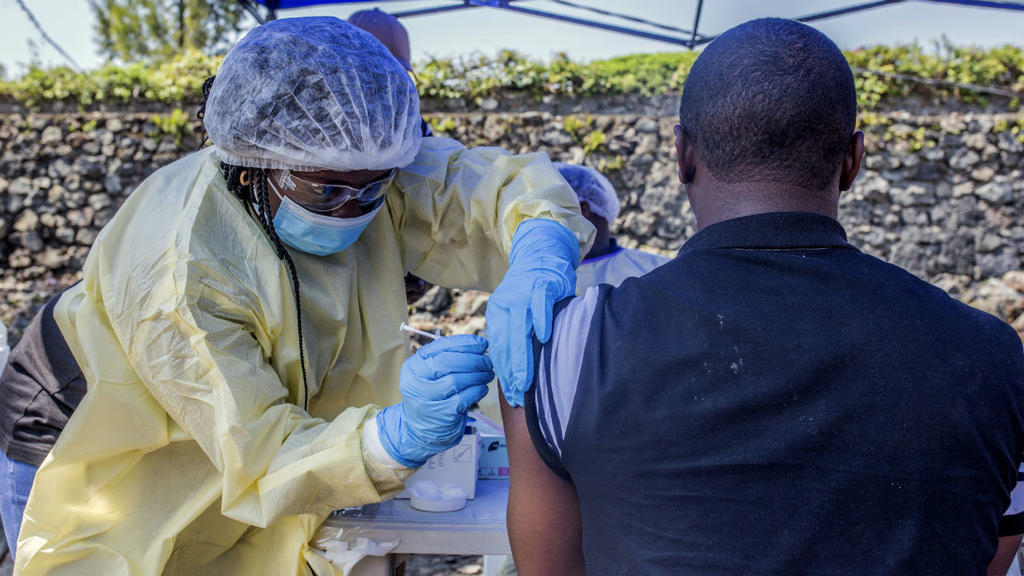

The Africa Centres for Disease Control and Prevention (Africa CDC) has renewed calls for preventive Ebola vaccination in high-risk areas and announced plans to integrate Mpox response into routine health systems.
Prof. Yap Boum, Deputy Incident Manager at Africa CDC’s Incident Management Support Team, made the disclosure during a virtual press briefing on Thursday, outlining new developments in epidemic preparedness and vaccine deployment.
He said the Ebola virus from the recent Democratic Republic of Congo (DRC) outbreak was sequenced within 24 hours by Dr Placide Mbala’s team at the Institut National de Recherche Biomédicale (INRB).
“The sequencing confirmed a new spillover event, with the strain closely related to the virus first identified in 1976, highlighting continued threats of zoonotic diseases in Ebola-endemic areas like Kasai.
“This is the seventh Ebola outbreak in Kasai. It’s time to protect frontline workers through preventive vaccination.
“This should be our next priority to avoid further public health emergencies,” Boum said.
He said that 500,000 Ebola vaccine doses were available through the International Coordinating Group (ICG), and the DRC had already developed a vaccination plan for high-risk workers and communities.
Boum urged Angola, Congo-Brazzaville, and other neighbouring countries to strengthen cross-border coordination and prepare for potential Ebola spillovers through surveillance and early vaccination strategies.
On Mpox, Boum said Africa CDC had mobilised six million vaccine doses for affected countries and was providing technical support to improve access and containment in hotspots across the continent.
Countries such as Liberia, Kenya, Ghana, and Guinea are currently receiving vaccine shipments and response support, based on outbreak intensity and readiness to implement targeted immunisation activities.
“We are now integrating Mpox vaccination into the African Primary Immunisation (API) framework to ensure continuity and build long-term demand for vaccine production within Africa,” he said.
Also speaking, Dr Kyeng Mercy, Head of the Epidemic Intelligence Unit, said Africa CDC had developed a continental roadmap to guide transition from emergency response to sustainable health system integration.
“Our aim is to preserve emergency response capacity and translate it into national health systems. Countries must adapt the roadmap and begin implementing it in line with their local needs,” she said.
Mercy added that some countries had already initiated their national transition plans and called on others to do the same to maintain epidemic preparedness momentum post-crisis.
She also said Africa CDC was working with partners like the World Health Organisation (WHO) and Gavi, the Vaccine Alliance, to secure 10 million cholera vaccine doses for rapid deployment.
Mercy emphasised the importance of coordinated multi-disease outbreak strategies and stronger resource mobilisation to improve readiness, response speed, and recovery capacity across all African Union member states.


NIGERIA DECIDES

 Davido's Net Worth & Lifestyle
