
Health
Pandemic: Preparedness not project, but culture — Prof. Ihekweazu

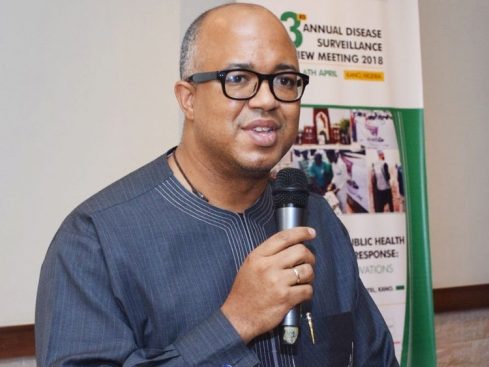

Chikwe Ihekweazu, Executive Director of the World Health Organisation (WHO) Health Emergencies Programme, says preparedness for health emergencies must be treated as a culture, not a project.
Ihekweazu said this virtually on Monday in Abuja in his goodwill message during the 10th anniversary celebration of the Dr Ameyo Stella Adadevoh (DRASA) Health Trust, in honour of the late Adadevoh’s extraordinary legacy.
He said DRASA was founded in memory of the extraordinary service rendered by the late Adadevoh, adding that the Trust had evolved into a living institution that continued to defend Nigeria’s health security every single day.
”We all remember the courage and conviction of Dr Ameyo Stella Adadevoh in 2014. Her swift action and unwavering commitment helped contain the Ebola outbreak and saved countless lives.
”Dr Adadevoh’s sacrifice grew into a sustained movement for prevention, preparedness, and commitment bridging the gap between grassroots and government, and transforming crisis response into life-saving systems,” he said.
Reflecting on his time as NCDC Director-General, Ihekweazu said that preparedness was not a one-off intervention but a shared culture built through consistency, collaboration, and community engagement.
”During my time leading the NCDC, I learned that preparedness is not a project, it is a culture. It grows from consistent partnerships and daily practice,” he said.
He described DRASA as one of the most effective partners to the Nigerian people, commending the organisation for its disciplined use of data, investment in infection prevention and control, and deep engagement with frontline health workers.
”In my current role at WHO, I work with colleagues around the world to prepare for and respond to health emergencies. Yet, what we do globally will only matter if we have strong national institutions and trusted local partners to turn strategy into action,” he added.
”The true test of global health security is not in conference halls, but in primary healthcare centres, schools, and communities; the very spaces where DRASA has concentrated its work for a decade.
”I continue to support and endorse DRASA’s work because I have seen its value. Partners like DRASA amplify essential messages, train rapid-response teams, and do the often-unseen work of strengthening Nigeria’s health system from within. That is what true partnership looks like,” he emphasised.
Ihekweazu noted that As DRASA marked a decade of service; the best way to honour the late Adadevoh’s legacy was to embed her spirit of courage and professionalism in every aspect of Nigeria’s health system.
”If we are serious about building stronger, safer health systems, we must continue to invest in and empower local institutions like DRASA; those that work quietly between emergencies to keep us all safe,” he added.
The News Agency of Nigeria (NAN) reports that in July 2014, when Liberian-American Patrick Sawyer arrived in Lagos showing Ebola symptoms, the now late Adadevoh promptly identified the threat and insisted he be quarantined in spite of external pressure.
Her decisive action prevented a nationwide outbreak and saved countless lives. Sadly, she contracted the virus and died on 19 August 2014.
Over the past 10 years, DRASA has trained thousands of health workers, improved infection prevention and control (IPC) practices, and supported Nigeria’s readiness for disease outbreaks.
Its model aligns with the global ”One Health” approach, connecting human, animal, and environmental health.
DRASA’s success proves that empowering local professionals with knowledge and resources can avert health crises before they escalate. Preparedness should not wait for the next outbreak; it must be part of everyday healthcare delivery.
Through its Young Professionals and DRASA Health Ambassadors initiatives, the organisation has inspired a new generation to champion health security, resilience, and responsible behaviour in schools and communities.


NIGERIA DECIDES

 Davido's Net Worth & Lifestyle
