
News
Honest dialogue effective key to curbing protests, says Jega

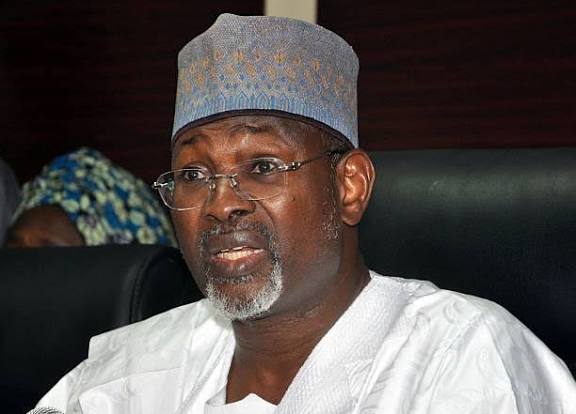

Attahiru Jega, the former Chairman of the Independent National Electoral Commission (INEC), says honest dialogue is an effective key to curbing protests.
Jega stated this during a panelist session, at the Youth National Discourse Abuja 2025, organised by the Eleniyancares Leadership Foundation, on Thursday in Abuja.
Jega, who was one of the panellists, said that while dialogue was essential for building trust and achieving results, he cautioned against viewing dialogue as a substitute for protest, stating that both were important fundamental elements in democratic development.
He defined protest as a constructive expression of disagreement that adds to progress when done constructively.
However, he explained that the negative, destructive aspect of protest—the violent protest—only arises under specific conditions.
“The deconstructive aspect of protest is, of course, the violent protest. But how does it happen? It’s when avenues of dialogue are shut,” he explained.
“When governance is not responsive to the needs and aspirations of citizens, when they feel totally blocked, that’s when they protest, and unfortunately, protest can degenerate if there is sufficient anger into anarchy.”
The former INEC Chairman identified the key challenge as ensuring the avenues of dialogue are constantly kept open.
Addressing how dialogue can be made effective to earn the trust of youth, Jega said that dialogue must not be done for its own sake, but must be aimed at achieving implementable outcomes.
He outlined two crucial steps for successful dialogue which according to him was honesty in engagement including ensuring sincerity and trust in the exchange of ideas.
The other according to him was timelines for implementation, saying there must be clear deadlines for the implementation of whatever is mutually agreed upon as a product of dialogue.
“If that is done, you build confidence, you achieve results, and you make the youth more actively inclined towards dialogue than protest,” he affirmed.
Jega said that the more successfully dialogue results in implemented outcomes, the less likely youth would be inclined to resort to any form of protest, even peaceful ones.
Responding to a question on systemic barriers preventing youth participation, Jega highlighted the “global paradox” where youth, in spite being the majority demography, remain the minority in politics and governance.
He noted that Nigeria is leading what is known as the “youth bulge,” with over 60 per cent of the population defined as youth.
Jega stressed that countries that recognise the value of their youth create mechanisms to ensure their active participation.
“It’s very, very important, therefore, we create opportunities, we include them in the process, and one of the ways, of course, is sensitisation, enlightenment, mentorship, and, of course, ensuring that their complaints are addressed,” Jega said.
On her part, the Director-General of the National Identity Management Commission (NIMC), Abisoye Coker-Odusote, urged Nigerian youths to get the National Identity Number (NIN) so that they can enjoy various government empowerment programmes for the youth.
Coker-Odusote, represented by Elvis Alagbebe, speaking on building trust and inclusion through digital identification, said that the NIN apart from enabling them to enjoy services offered by government would also help to enhance security in the country.
She urged Youth to support the agency identify manage by getting involved in the NIN registration process.
She also said that the youth could do that by being ambassadors of NIMC to encourage people especially at the grassroots to register for NIN or apply for enrolment license.


NIGERIA DECIDES

 Davido's Net Worth & Lifestyle
