
Agric
Agriculture experts urge FG to tackle transportation, others to maintain food price drop

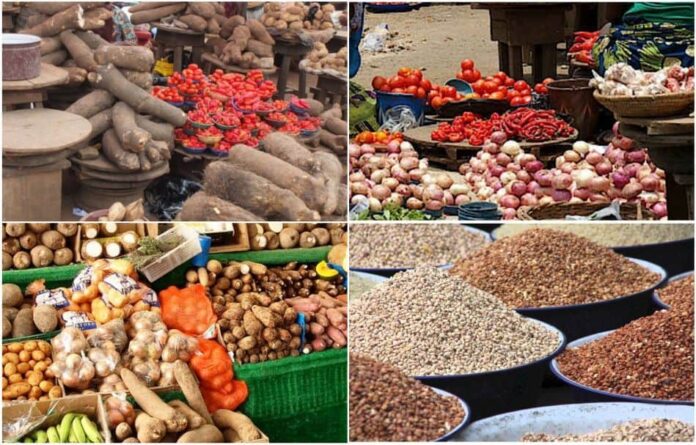

Some agriculture experts have urged the Federal Government to tackle transport issues in the movement of produce to realise its goal of reducing food prices.
The experts gave the advice while reacting to findings from a survey by our correspondent in Akwa Ibom, Cross River and Rivers with regard to foodstuff prices.
They said that transport costs and deplorable roads contributed to high cost of food stuffs.
The experts noted a price dropped on some commodities but attributed it to harvest period, duty-free import policy and lack of produce preservation facilities.
They said that the price drop was temporary, urging a permanent solution.
In Rivers, some analysts commended the governments food intervention policies, including the 150-days duty free policy for essential food imports which, they said, had contributed to price drop on some foods.
Mr Imam Ewang, a farm produce offtaker based in Port Harcourt, said that the duty-free import policy was for a short period of time, and might cause upward surge in food prices when the period would terminate.
He said that markets were flooded with cheaper imported food commodities, which portended danger to local farmers especially as agro imputs and labour had gone higher.
“For instance, a 50kg bag of rice which sold for between N85,000 and N100,000 now sells for as low as between N45,000 and N60,000, depending on quality; a basin of Garri (cassava flakes) sold for N30,000 but is currently going for N11,000.
“While the consumer buys with joy, the farmers go home counting losses incurred on high investment made on agro products and manpower.
“The 150 days duty-free import waiver has indeed benefitted consumers who actually were the reason for implementation but it has, on the other hand, pushed local farmers into losses as cost of production currently outshines outputs,’’ he said.
He added that import waiver would have been more impactful if there were functional silos cited across the 36 states of the country for stockpiling ahead of planting season, to curb scarcity
“Farmers now sell produce at reduced cost to avoid spoilage and losses due to the shortness in shelf life of farm produce,” he said.
An agriculture extension officer, who spoke on condition of anonymity, called for a more holistic intervention policy to address key issues about security, farmer/herder crisis, storage, transport, incentives and distribution affecting food sufficiency.
He noted that scientific discoveries had ensured improved seedlings and yields and provided capacity to enable farmers to adopt cooperative/mechanised agriculture while enhancing agriculture value chain.
He, however, said that the absence of good storage facilities in all the states of the federation had continued to threaten such efforts and sustainability in food prices in and out of season.
‘’Visit any major market dumps and see the quantum of wastage; food sufficiency can only be sustained if storage challenges is quickly addressed.
“Today, a big bunch of unripened plantain is sold for between N3,000 and N4,000 because plantain is in season, but few months to come, that same size would hardly be seen for N10,000.
‘’It is worrisome to note that Rivers with its huge agricultural potential could not boast of a single functional silo,’’ he said.
He said that the only strategic state-owned silo for grains storage, located in Rumuodumanya, Obio/Akpor Local Government Area, had been moribund.
Mrs Hamzat Ahmed, a Port Harcourt-based yam trader, said that high cost of transport was limiting the desired impact of some government food intervention policies.
She said the Federal Government agriculture incentive was commendable but added that there were existing disparity in food prices across the country due to transport costs.
According to Ahmed, when a trader spends more on transport than on purchase of goods, the consumer will pay more for the goods.
“No matter the level of agriculture incentives, high transport cost will continue to overburden distribution cost; the government should revive the rail system to ease inter-state commodity transaction,” she said.
In Cross River, an economist, Mr Richard Inoyo, said that the country’s major challenge was not food shortage but weak storage and logistics systems, and decried the deplorable state of roads affecting transport of foodstuffs.
‘’Nigeria loses up to 25 per cent of its food at the farm level due to poor storage and poor road networks that connect farms and urban areas; this problem has to be solved.
“As a people, we need to invest in silos, processing centres and better rural roads to stabilise prices; government at all levels need to develop clear agricultural plans that would be location-specific,” he maintained.
He also urged them to implement the plans to sustain agricultural gains and encouraged stronger links between universities, research institutes and government to design agricultural development plans which would make the profession appealing to young people.
“Nigeria can expand food production if its policies align with investment and infrastructure,” he added.
Inoyo said the current price drop were driven mainly by the harvest season across several states which increased supply and pushed down prices but added that products like palm oil and honey remained expensive as they were not in season
He attributed grains’ price drop to increased participation in farming after recent economic pressures, noting that more hands in farms would naturally increase supply and lower prices.
Responding to price drop, Mrs Judith Ameh, a foodstuff trader, said that the price of rice dropped to between N50,000 and N55,000 depending on grade as against between N70,000 and 90,000 few months ago.
Ameh explained that there had been a slight reduction in the price of yam but moving the yams posed a challenge due to poor condition of the roads and high transportation costs.
She noted that the prices of guinea corn, millet and maize had dropped significantly in recent weeks, saying that guinea corn currently sells for N2,800 per custard bucket as against N4,000 it was previously sold.
She said millet and maize now sold for N2,500, compared to over N3,000 earlier in the year while the price of ogbono (bush mango) has remained largely unchanged, with the premium variety selling for N2,000 per cup.
‘’A bag of honey beans that we buy in Gombe and transport to our state now costs N100,000; this same quantity sold for as high as N250,000 last December.
‘’Many farmers incurred losses when the price crashed after stocking up earlier in the year; federal and state governments should harness ways of reducing transportation costs in order to sustain reduction in food prices,’’ Ameh said.
Some respondents in Uyo in Akwa Ibom expressed happiness over recent reduction in prices of some foodstuff, especially garri, rice, beans and yam, saying that they could now feed their families better.
They called for reduction in prices of cooking gas, saying, ‘’if the prices stabilised.
it would make life meaningful for many Nigerians.
“I am not happy to buy cooking gas for between N1, 600 to N1, 800 per kilogram at the retail shop; before now, I used to buy it for N1, 050 or N1, 100 per kilogram at the filling stations.
“N1, 800 for a kilogram of gas is too much and most households cannot afford it,’’ Mr Gabriel Wilson, one of the residents, said.
At Akpan Andem market, a dealer on food items, Mr Ubong Duff, said that prices of food items had come down a little since the month of October, attributing it to the harvest season.
Duff said that a 50kg bag of parboiled rice was being sold for between N70, 000 and N75 000 as against N80, 000 sold in September.
‘’Garri, in Akwa Ibom, is sold for N1,000 per 10 cups as against eight cups in September while 50kg is between N35, 000 and 40,000 as against N50,000 to N55,000 sold a month ago.
‘’100kg bag of beans now goes for N125, 000 as against N140, 000 while a cup of beans goes for N350 as against N500 it was previously sold,’’ Duff said.
Similarly, Mrs Ndifreke Ime, an Uyo based housewife, said that she bought a basin of garri recently at a cost of N6, 500 as against the price of N7, 500 at Itam market.
She said that the prices of foodstuff, especially garri, beans and rice had been slightly down recently, and wished they remained so to alleviate the sufferings of many families.
She said that many Nigerians spent almost 100 per cent of the income on feeding.
Miss Agnes Akpan, an Uyo-based dealer in beverages, said that prices of the products had been relatively stable as a 450g pack went for N4, 000 as against N5, 000 few months ago.
She said that a roll of sachet Milo was being sold for between N1, 600 and N1, 800 while a carton of noodles went for N8, 000 as against N8, 500, and spaghetti, N15, 000 as against N17, 500.
However, Prof. John Udoidem, said the reduction in price of some food items in the state would not be sustained but would be only for a short time since prices of goods were determined by a number of variables.
According to the professor of Finance, University of Uyo, the pump price of petrol in the state had been so erratic and unstable, while marketers fix price at will which affects price of goods and services.
“The drop in food prices is for a very short run; there is no sign of sustainability. The downward and upward trend in the sale of petrol is such that one cannot say exactly what the price will be tomorrow,’’ he said.
Udoidem said that increase in pump price would lead to increase in prices of foodstuffs.
‘’As the pump price of fuel is rising, the cost of transportation will also go up; who pays last for the cost of transportation that has gone up? It is the final consumers.
Udoidem called on regulatory agencies to find ways of ensuring stability in the pump price of fuel, saying its impact on consumers, products and services should be considered.


NIGERIA DECIDES

 Davido's Net Worth & Lifestyle
