
BUSINESS
Repositioning Nigeria’s mining sector to gain global relevance

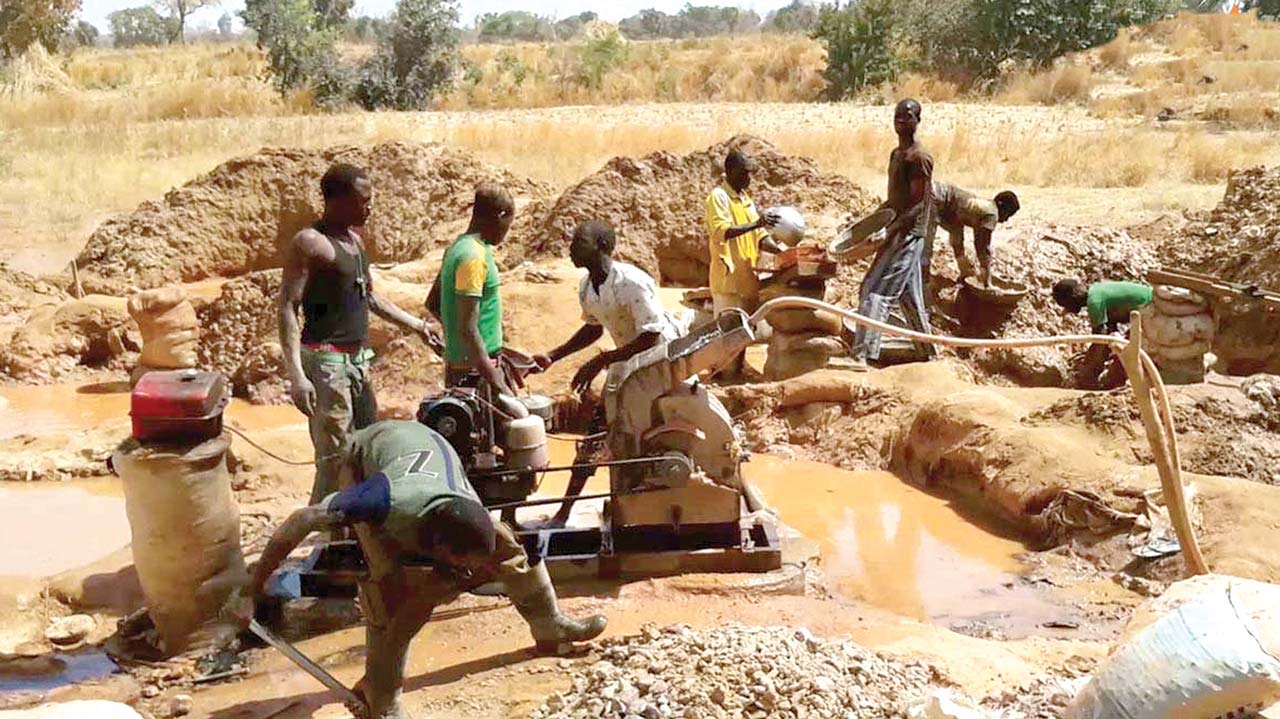

In Nigeria’s quest for economic diversification, a sector has been identified as the next goldmine for revenue generation — the solid minerals.
Available data indicates that Nigeria possesses at least 44 mineral deposits in commercial quantities across more than 500 locations nationwide.
A finding corroborated by German firm Geo-scan, which conducted a preliminary survey, estimates that the country has about 750 billion dollars’ worth of solid minerals underground, a quarter of which remains untapped.
Experts say that the sector holds strong potential to contribute significantly to Nigeria’s Gross Domestic Product (GDP) and provide a strategic advantage for national development, but strong political will is required to achieve that.
In the past, the mining sector suffered from weak regulation, which allowed criminal activities to flourish.
Illegal miners capitalised on the government’s limited oversight to make illicit gains, much of which was reportedly used to sponsor banditry, particularly in the North-West and North-Central zones.
Acknowledging the sector’ gaps, President Bola Tinubu’s administration introduced innovations and reforms to address them such as the Value addition of Minerals Policy and the operation use it or lose it of mineral titles licences.
Others include a dual-pronged approach comprising of coercive and persuasive measures to address illegal mining and secure mining sites nationwide as well as the introduction of a new mining rate regime, among other measures.
Consequently, the establishment of several mineral processing companies has been linked to these policies, including the ASBA Group and Wisdom Group lithium processing company located in the Wasa District of the Federal Capital Territory (FCT), Abuja.
Also, in 2024, Tinubu inaugurated Nigeria’s largest lithium ore processing plant in Lafia, Nasarawa State in addition to an ultra-modern analysis laboratory in Sabon-Wuse, Niger State among others.
The reforms also led to the revocation of 924 dormant licences in 2024 and an additional 1,263 in September over default in service fees to create room for serious investors.
While these reforms aim to sanitise the solid minerals sector, the initiatives are intended to reposition Nigeria’s mining industry for global relevance.
According to the Minister of Solid Minerals Development, Dr Dele Alake, Nigeria’s mining sector is steadily becoming a cornerstone of economic growth, with revenues rising from N8.6 billion in 2022 to N38 billion in 2025.
However, the Nigeria Extractive Transparency Initiative NEITI notes that the sector’s contribution to GDP remains minimal.
Alake said that since September 2023, when Tinubu’s administration assumed office, Chinese companies had invested 1.3 billion dollars in Lithium processing in Nigeria, a feat acknowledged by stakeholders as a sign of progress.
It is worthy of note that the initiatives of the Federal Government towards repositioning the mining sector for global relevance are also being supported by stakeholders through their various platforms and conferences.
One of such platforms is the Miners Association of Nigeria (MAN) which recently held the 10th edition of the Nigeria Mining Week, from Oct.13 to Oct. 15.
The conference focused on the theme “Nigeria Mining: From Progress to Global Relevance.”
No fewer than 100 exhibitors showcased cutting-edge mining technologies at the Mining Week, while more than 3,500 delegates and participants from within and outside Nigeria attended the conference.
It was hosted by the Ministry of Solid Minerals Development and organised by MAN in partnership with PricewaterhouseCoopers (PwC) and the VUKA Group.
It centered on fostering commitment to develop the mining sector amid the global clean energy transition, focusing on opportunities, addressing gaps and promoting innovations to drive Nigeria’s economic growth.
The conference served as a platform to attract investors, share expertise and showcase mineral resources at state and local levels.
It also provided a platform for experts, policymakers, financiers, miners, industry captains, explorers, technology providers, investors and development partners to review the past decade’s progress.
The Event Director, Mining at VUKA, Mr Samukelo Madlabane, said that the conference also provided an avenue to learn best practices by gaining insights from global experts on sustainable mining and resource governance.
Madlabane explained that new features were introduced to the conference, including the Women in Extractive Industries Forum, Nigeria Steel Forum, Gemstone Forum, and Quarrying Forum.
He described the Deal Room as a key addition, transforming the event from a networking platform into a space for tangible business transactions.
For the National President of the MAN, Mr Dele Ayankale, the annual conference is a continuum of series of conversations aimed at developing the mining industry to harness its potentials.
Ayankale said the annual conference has, over the past nine years, led discussions shaping Nigeria’s solid minerals sector and facilitated the introduction of emerging global technologies and policy reforms that have improved the ease of doing business.
He said that mining companies were increasingly adopting modern technologies and sustainable practices to enhance efficiency, reduce environmental impact and boost community engagement.
According to him, the conference serves as a collaborative platform for government, investors, operators, service providers, sponsors, partners and civil society to strategise on sustainable mining growth.
“It offers a chance to showcase technological innovation, sustainability and business excellence across the mining value chain,” he said.
On his part, the solid minerals minister, underscored the event’s role in showcasing the sector’s potential to local and international stakeholders and reaffirmed the government’s commitment to positioning Nigeria as a prime destination for mining investment.
“We are positioning Nigeria to compete globally and to be recognised as the mining investment destination of choice, leveraging on our vast mineral endowments, our improving regulatory environment and our commitment to sustainable development.’’
He added that the forum aimed to set the tone for the future and strengthen Nigeria’s standing in the global mining community.
The theme of the conference, the minister said aligned with Nigeria’s goal to boost revenue by adding value to minerals and tapping opportunities in the energy transition.
Alake said that the mining week had chronicled the sector’s transformation from a largely informal industry into one increasingly driven by structure, innovation, and private investment.
He said several international mining delegations from Africa, Europe, Asia and the Middle East participated in the event, reflecting growing global interest in Nigeria’s mineral potential.
“Together through collaborative efforts, innovation and steadfast commitment, we will reposition Nigeria as a major force in the global mining landscape,” he said.
Tinubu, in his remarks at the conference, said that Nigeria must harness its critical minerals wealth responsibly to build a fortified economy that creates jobs and supports industrial clusters.
Represented by the Sen. George Akume, the Secretary to the Government of the Federation , he said his administration made the historic decision to increase the 2025 national budget by N4.5 trillion, with an extra N1 trillion earmarked for the solid minerals sector.
Tinubu explained that these funds were being channeled towards geo-scientific exploration, detailed geological surveys and the development of critical infrastructure to unlock our mineral-rich regions.
He said the move aimed at enhancing Nigeria’s economic resilience by reducing its dependence on volatile oil markets and creating alternative revenue streams for the nation.
“It will also ensure regional equity by spurring development in resource-rich but underdeveloped areas, boosting rural economies, and supporting the processing and export of minerals to increase our foreign exchange earnings, “he said.
While at the conference, experts and stakeholders called for stronger inter-agency collaboration to unlock financing for small-scale mining.
One of which was Mrs Amina Sijuwade, Director, Iron Ore Mining Limited, who urged relevant government agencies to harmonise policies that reduce mining risks, a critical requirement in strengthening lenders’ confidence in financing the sector.
Sijuwade noted that many financial institutions lacked an understanding of how the mining sector operated, making it difficult for them to design suitable funding provisions.
Mr Abubakar Bello, Managing Director of the Nigerian Export-Import Bank (NEXIM), linked the sector’s high-risk classification contributing to the reluctance of financial institutions to extend credit facilities.
Bello added that policy consistency and sector regulatory clarity were key to attracting funding to the sector through investments thereby further positioning it for global relevance.
In all, stakeholders say they are confident that conversations at the conference inspired innovations, new partnerships and renewed confidence in the future of Nigeria’s solid minerals sector.


NIGERIA DECIDES

 Davido's Net Worth & Lifestyle
