
News
Bridging manpower gap in Nigeria Police Force

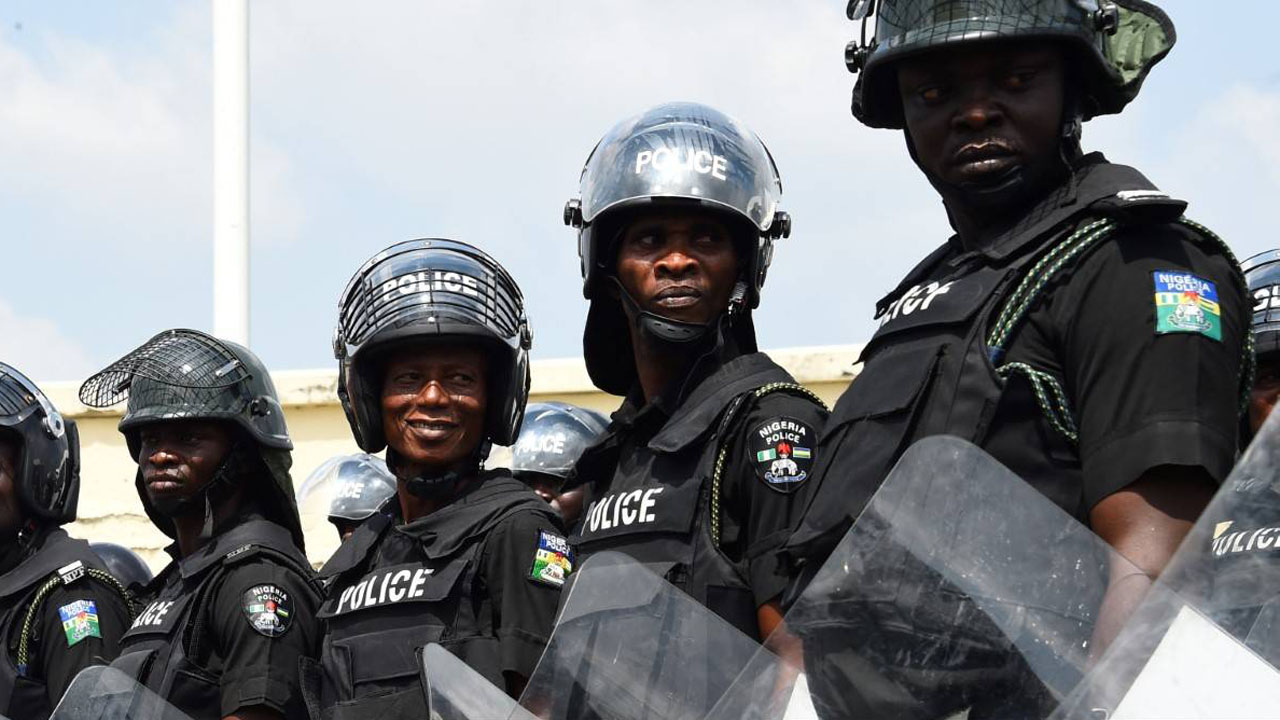

Over the years, insufficient manpower has been a militating factor in effective policing of Nigeria; a challenge compounded by the current multi-faceted security concerns in the country.
In most cases, the police cannot rapidly respond to reported crime incidents because the few officers and men are either not available or are responding to an earlier incident.
With this understaffed policing system, Nigeria can only boast of citizen-policing ratio of 1:650, far short of 1:450 prescribed by the UN.
Recently, President Bola Tinubu, while declaring a nationwide security emergency, directed the police to recruit an additional 20,000 officers, in addition to 30,000 earlier okayed, bringing the total to 50,000.
The Inspector-General of Police (I-G), Mr Kayode Egbetokun, who spoke at recent event, said insufficient manpower was hindering the Nigeria Police’s efforts to tackle crimes in the country.
He said that the force needed an extra 190,000 personnel to effectively man the country and be at parity with the United Nations recommended ratio.
Egbetokun said the inadequate manpower had resulted to low police presence in the country and could hinder the government’s industrialization drive.
“Without sufficient police presence and response capabilities, industrial sites could become vulnerable to criminal activities and hamper economic progress.
“Aside from this, the low manpower of the Nigerian police is also affecting its capacity to secure the country’s critical infrastructure,” he said.
Worthy of recall, President Muhammadu Buhari, in 2022, approved the recruitment of 10,000 police constables annually into the Nigeria Police Force to enhance internal security and address manpower shortages in the force.
Buhari said the approval was to strengthen the Nigeria Police Force in response to the ongoing security challenges in the country, address the prevalent shortage of manpower within the force and improve overall law enforcement capabilities.
Observers say the laudable effort by the Buhari-led Federal Government to strengthen the personnel capacity of the Nigeria Police was frustrated by the rift between the Police Service Commission (PSC), and the Nigeria Police Force over who has the power to recruit for the force.
Stakeholders say the rift between the two agencies over the recruitment of constables is not new as successive Inspectors-General of Police had argued that the force should manage the recruitment process, claiming that it understands the qualifications and aptitudes necessary for effective policing.
The PSC, established by the 1999 Constitution to oversee appointments, promotions, and disciplinary control within the NPF, insists it holds the constitutional mandate to recruit constables.
Mr Alex Bamidele, a Legal Practitioner, said the conflict of interpretation had led to public spats, legal battles, and administrative standoffs, all of which had stalled the recruitment process.
He said Section 214(1) of the constitution establishes the Nigeria Police Force and outlines its primary responsibility for maintaining internal security, law and order, and enforcement.
Bamidele said Section 153(1)(m) and Third Schedule, Part I, Paragraph 30 established the PSC and outline its functions.
He cited the Third Schedule: the PSC is responsible for: “Appointing persons to offices in the Nigeria Police Force (other than the office of the Inspector-General of Police), dismissing and exercising disciplinary control over persons holding such offices.”
Bamidele said there was no basis for the controversy and urged the police authorities to comply with the constitutional provisions awarding the PSC the mandate to recruit constables into the police.
“The Supreme Court had laid the matter to rest in its July 11, 2023, ruling in favour of the commission.”
He said the perennial quarrel between the police authorities and the PSC on the constables’ recruitment symbolised the deeper rot and dysfunction in the country’s policing and security architecture.
According to him, the implications of the dispute are far-reaching.
“For one, it disrupts the recruitment process, leading to delays in bolstering the ranks of a police force already stretched thin by Nigeria’s myriad security challenges.
“Although 10,000 constables are projected for recruitment annually, only 20,000 of 60,000 have been employed in the past six years.
“The country faces serious security challenges and so, an efficient and timely recruitment process is not just a bureaucratic necessity but a critical component of national security.
“To resolve this, it is crucial to respect the constitutional mandate of the PSC while ensuring that the operational needs and insights of the Nigeria Police Force are integrated into the recruitment process,” he said.
Worthy of note, late Dr Solomon Arase, upon his appointment as the chairman of the commission in 2023, pledged to restore peace and build trust between the PSC and the Nigeria Police Force, and resolve all knotty issues in no time.
He said the idea was to bequeath to Nigeria and Nigerians a Police Force of their “dreams and aspirations; able and willing to provide services to the Nigerian people in the most transparent, responsible and responsive manner”.
Arase said his appointment as the chairman of the commission came at a critical time in national life, when the commission and the Nigeria Police Force had engaged in seemingly intractable disputations over roles and powers, which regrettably compounded and degenerated into series of litigations.
He said the embarrassing scenario was informed and fuelled by preconceptions, misconceptions and prejudices against each other, ” founded on mutual distrust and suspicion.”
Arase said in the raging disconcertment and belligerency, it was the Nigerian people that suffered as neither PSC nor Nigeria Police Force could function effectively in delivering on its mandate without the support and cooperation of the other, especially, when both institutions that were supposed to be mutually -reinforcing were at daggers drawn.
“I set out with a vision and mission to de-escalate and contain the raging conflict, douse the disquiet and restore peace, understanding and cooperation between the two institutions necessary for my actualisation of Security Sector Reforms (SSR) in Nigeria,” he said.
Mr Frank Edeh, a security expert, commended the efforts of Arase for restoring peace and building trust between the PSC and the Nigeria Police Force that led to the recruitment of a batch of 10,000 constables into the Nigeria Police Force in 2024.
Edeh urged the PSC and police authorities to build on the reconciliation to ensure regular recruitment of personnel into the force to strengthen the internal security of the country.
He said the recruitment of constables and Cadet Assistant Superintendent of Police (ASP) from the Nigeria Police Academy was not enough to meet the manpower need of the Nigeria Police Force.
The security expert said the number of graduates being produced annually from the academy was not enough to fill the vacancies of senior officers created by retirement, death and others in the force.
Edeh called for the reintroduction of Short Service recruitment for ASP into the Nigeria Police to meet vacancies for senior positions in the force.
A reliable source close to the PSC said the reconciliation efforts of Arase had yielded positive results that led to the completion of the recruitment of the 2024 batch of 10,000 constables into the Nigeria Police Force.
The source blamed the earlier suspension of the annual recruitment of constables on the legal tussle between the commission and the Nigeria Police Force.
He said the commission had concluded arrangement for the 2025 batch of recruitment of 10,000 constables into the Nigeria Police awaiting release of fund by the Federal Government.
The source said the commission, with the support of the UNDP, had created the platform for the recruitment process and trained its personnel for the task.
It is the stakeholders’ view that, to tackle the manpower challenge in the Nigeria Police, large-scale and regular recruitment should be embarked upon while the lingering stand-off between the PSC and the force also needs to be addressed.


NIGERIA DECIDES

 Davido's Net Worth & Lifestyle
