
Health
A silent emergency: Soaring costs of diabetes care spark alarm

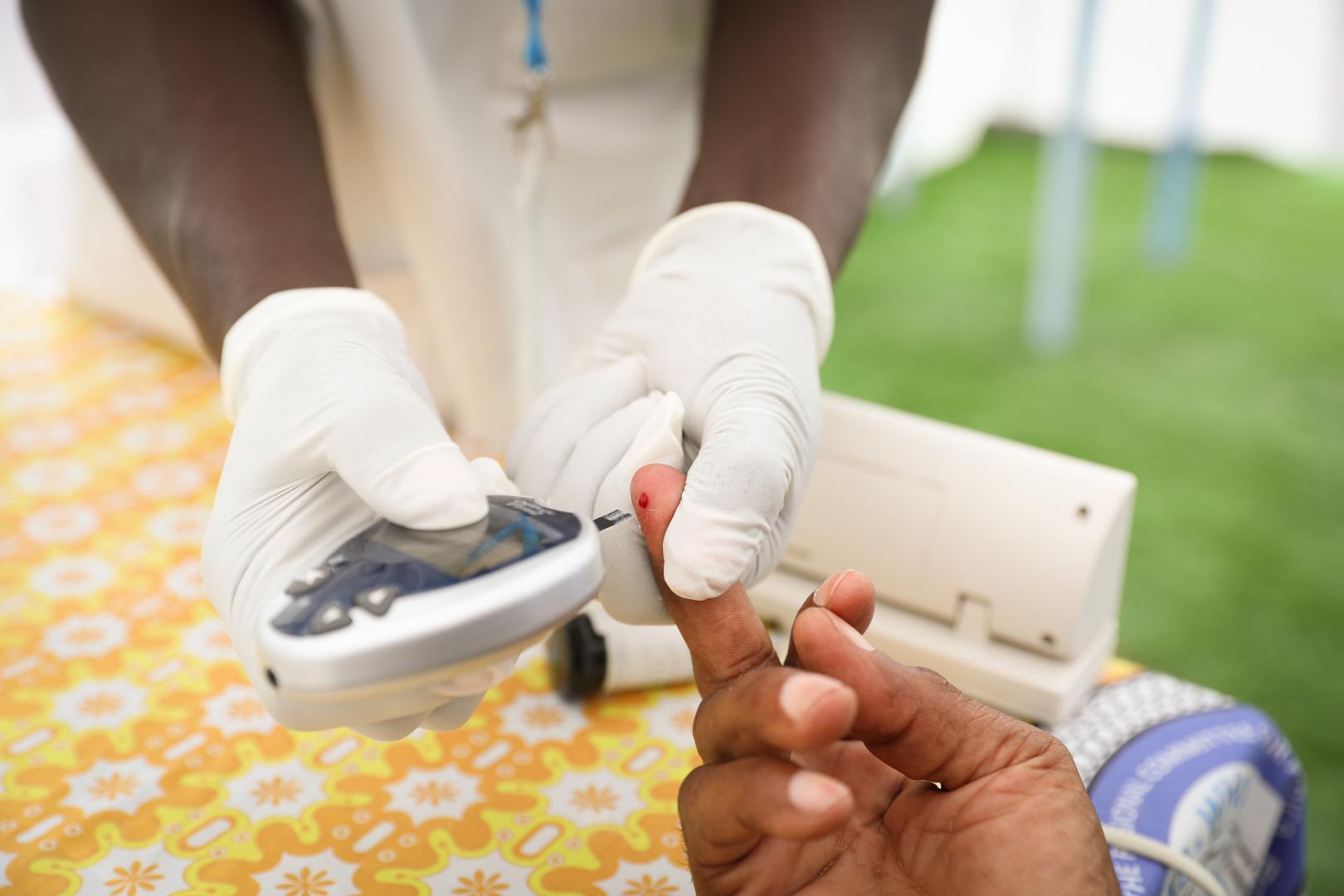

For Mrs Schola Effiong, a 58-year-old confidential secretary in Calabar, managing diabetes in today’s economy feels like “climbing a hill that only gets steeper”.
Diagnosed in 2009, she said her monthly expenditure on insulin, tablets, laboratory tests and monitoring supplies now exceeds ₦150,000.
“You cannot stop taking the drugs, yet the cost keeps going up.
“Sometimes I do not have the money to buy some of them at the same time,” she said.
Her struggle mirrors the experiences of thousands of Nigerians at a time when experts warn that diabetes is becoming a major public health concern.
According to a 2018 national meta-analysis by Uloko et al., titled “Prevalence and Risk Factors for Diabetes Mellitus in Nigeria: A Systematic Review and Meta-Analysis”, Nigeria’s diabetes prevalence stands at 5.7 per cent, representing 11.2 million adults.
The authors defined diabetes mellitus as a metabolic disorder of chronic hyperglycaemia caused by absolute or relative insulin deficiency and associated with disturbances in carbohydrate, protein and fat metabolism.
The study, which pooled data from numerous research works across the country, revealed wide regional disparities.
The prevalence rate was 3.0 per cent in the North-West, 5.9 per cent in the North-East, and 3.8 per cent in the North-Central, respectively.
The rates were higher in the southern part of the country: 5.5 per cent in the South-West, 4.6 per cent in the South-East, and 9.8 per cent in the South-South.
Experts say these patterns reflect changing lifestyles, rapid urbanisation and limited access to routine screening.
However, for many patients, statistics tell only a fraction of the real story.
Mr Offum Akung, a 57-year-old teacher in Cross River, said he had to ration his drugs because prices kept rising faster than his salary.
“I spend over ₦40,000 a month and still cannot buy everything on my prescription.
“I rely mostly on Glucophage now; when money allows, I add Neurovite Forte; diabetes management has become more difficult than the disease itself,” he said.
He appealed for government intervention, saying many patients were already “giving up”.
The Second Vice-President of the Diabetes Association of Nigeria, Mr Bernard Enyia, said the economic situation had pushed many Nigerians with diabetes into dangerous coping methods.
He said that he once managed his condition with about ₦70,000 monthly, but currently spends more than ₦180,000.
“Insulin has become something you pray for, while some people are sharing doses or skipping injections.
“Once you break treatment, the complications come quickly.”
Enyia, who lost his job as a health worker in 2017 due to frequent hospital visits, described the emotional toll as immense.
“It affects your finances, your social life, your marriage — everything. Many Nigerians with diabetes are quietly drowning,” he said.
Globally, concerns are also rising.
The World Health Organisation (WHO) estimates that more than 24 million adults in Africa are living with diabetes, a figure projected to rise to 60 million by 2050.
Marking World Diabetes Day 2025, WHO Regional Director for Africa, Prof. Mohamed Janabi, warned that rising obesity, lifestyle changes and weak health systems were fueling an “unprecedented wave of diabetes” across the continent.
He urged governments to prioritise access to affordable insulin, diagnostics and long-term care.
More so, pharmacists say they are witnessing the crisis firsthand.
The Senior Vice-President, Advantage Health Africa, Mr Adewale Oladigbolu, said many patients were no longer able to maintain regular medication schedules.
“People buy drugs today and skip them tomorrow because they do not have money.
“With non-adherence, they never reach therapeutic goals.”
Oladigbolu, a Fellow of the Pharmaceutical Society of Nigeria, said that locally manufactured metformin remained in high demand due to affordability, but insulin-dependent patients faced the harshest burden.
He stressed that diabetes care extended far beyond drugs.
“You need glucometers, strips, blood pressure monitors and regular tests.
“In countries where insurance work, patients do not think about the cost; in Nigeria, they pay for everything out of pocket,” he said.
He called for diabetes care to be covered under health insurance to reduce the financial burden on patients.
President of the Diabetes Association of Nigeria, Prof. Ejiofor Ugwu, described the rising cost of treatment as “a national crisis hiding in plain sight.”
He said insulin, which sold for about ₦3,500 four years ago, presently costs ₦18,000 to ₦22,000 per vial.
“Test strips that were ₦2,000 now sell for ₦14,000, while glucometers have risen from ₦5,000 to over ₦25,000.
“On average, a patient now needs between ₦100,000 and ₦120,000 every month. Imagine earning ₦50,000 and being asked to spend twice that on one illness.”
He warned that between half and two-thirds of Nigerians with diabetes remain undiagnosed.
“We are seeing more kidney failure, more limb amputations, more blindness.
“These are late presentations caused by delayed or inconsistent treatment.”
Ugwu urged the Federal Government to urgently subsidise essential anti-diabetic medications and remove taxes on their importation.
“Most of these drugs are produced outside the country.
“Once you add import duties and other charges, prices become unbearable; subsidies and tax waivers could drop costs by at least 30 per cent,” he said.
He also called for expansion of the National Health Insurance Authority (NHIA) to cover a wider range of anti-diabetic medicines, glucose meters and strips — none of which are currently covered.
For many Nigerians, however, the struggle continues daily.
Across households, clinics and pharmacies, the message is the same: as Nigeria’s diabetes prevalence rises and treatment costs soar, more patients are slipping through the cracks — some silently, others painfully — while waiting for meaningful intervention.
In all, stakeholders say diabetes is a national emergency; people are dying quietly because they cannot afford medicine; hence the urgent need for relevant authorities to make anti-diabetic medications accessible and affordable.


NIGERIA DECIDES

 Davido's Net Worth & Lifestyle
