
News
Yusuf reaffirms zero-tolerance for corruption, tasks youths on integrity

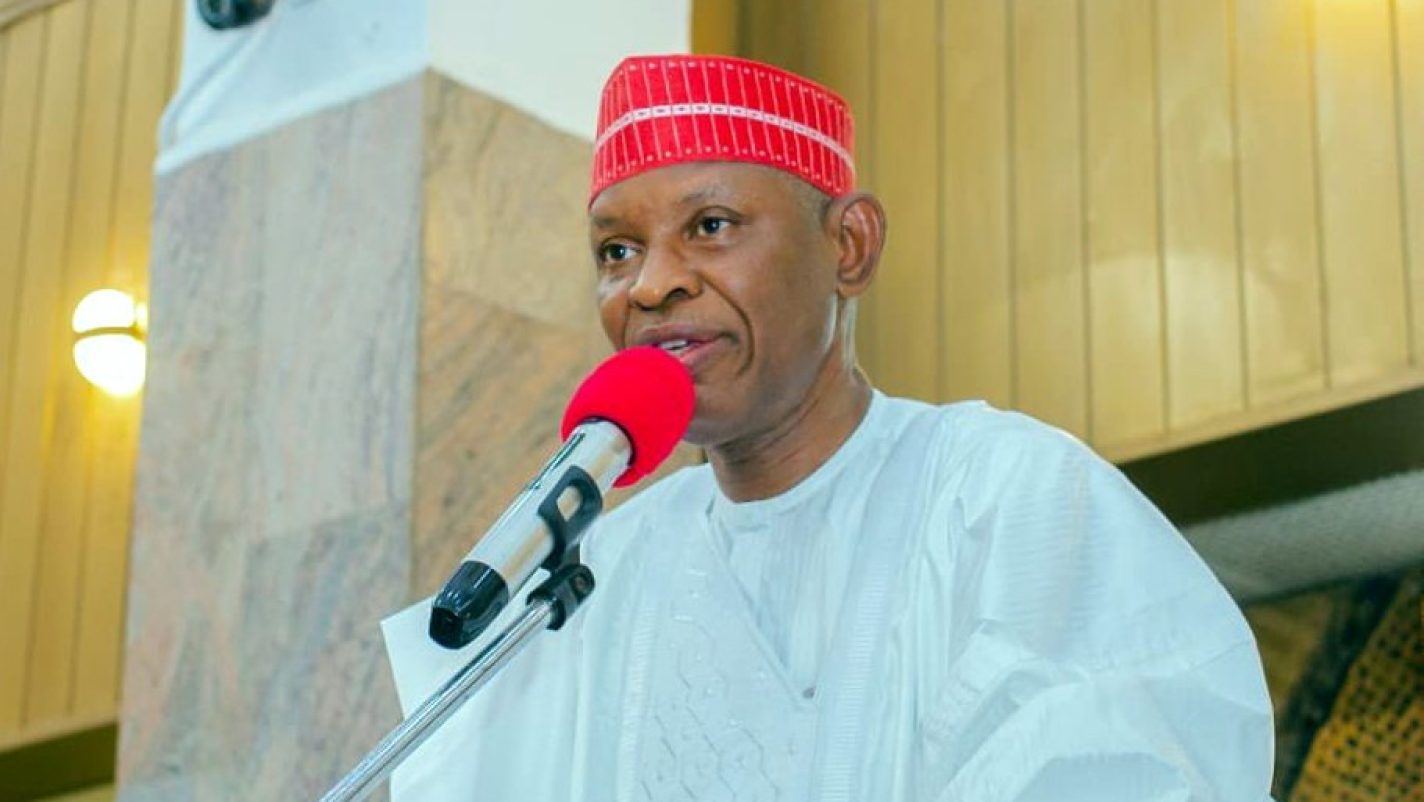

Abba Yusuf of Kano State has reiterated his administration’s commitment to a zero-tolerance policy on corruption, saying the government will not compromise in safeguarding public resources for the collective good of citizens.
Yusuf, represented by the Secretary to the State Government (SSG), Alhaji Umar Ibrahim, said this while addressing participants at an event marking the 2025 International Anti-Corruption Day on Tuesday in Kano.
He said corruption remained a direct assault on the poor, the vulnerable and the future of children, stressing that his administration had adopted strict measures to strengthen transparency and accountability across public institutions.
The Governor further said that a major step taken by the government was the granting of full independence to the Kano State Public Complaints and Anti-Corruption Commission (PCACC), describing the autonomy as a “sacred pillar” in the state’s governance framework.
According to him, the administration had also introduced merit-based appointments and created strong synergy with federal and local agencies to deepen the fight against corruption.
The governor explained that the state had embarked on a series of specialised capacity-building workshops for executive council members, Advisers, Permanent Secretaries, Directors and Heads of parastatals to entrench prudent management of public resources.
“These efforts are deliberately designed to build a public service culture where accountability is non-negotiable and ethical leadership is the only acceptable standard,” he said.
Yusuf highlighted some of the government’s achievements linked to the anti-corruption drive, including the recovery of public lands and assets.
Others were the declaration of a state of emergency in key sectors, payment of inherited pensions and gratuities, and renewed investment in agriculture, healthcare and infrastructure.
He stated that in spite of these gains, sustained investments and collective actions were required, adding that the youths must take the lead in shaping a corruption-free future.
“With nearly half of our population under thirty, their energy and innovation remain our greatest assets.
“The youths are not only victims of a corrupt system they are the agents of change capable of exposing wrongdoing and demanding accountability,” he explained.
The governor urged young people to raise their voices, mobilise communities and champion integrity in both public and private spaces.
Yusuf further assured that the administration would continue to strengthen institutions weakened over the last decade, protect whistleblowers, and ensure that every naira of public funds serves the common good.
He says: “The people of Kano are watching. They are tired of promises. They demand action and deserve results.
“By the grace of Allah, we shall continue to deliver and bequeath a legacy of development to future generations.”
Yusuf called for sustained collaboration among government, civil society, youths groups, the private sector and security agencies to build a state where integrity thrives and opportunities are no longer blocked by corruption.
Earlier, the Chairman, Kano State Public Complaints and Anti-Corruption Commission (PCACC) Mr Saidu Yahaya, reiterated his commitment to strengthening transparency and accountability across the state.
He said that the commission was fully prepared to safeguard public resources under the current administration.
Yahaya expressed appreciation to Yusuf for granting the commission full operational independence, describing the gesture as a demonstration of the administration’s firm commitment to good governance.
He said the autonomy had enabled the Commission to deepen its investigative capacity, enhance intelligence-gathering systems and implement reforms aimed at repositioning PCACC as a modern and technology-driven institution.
According to him, the internal reforms included advanced staff training, improved case management processes, enhanced public engagement mechanisms and a strengthened whistle-blowing framework.
“The commission is now more proactive and better equipped to prevent corruption, rather than merely reacting to reported cases,” he said.
Yahaya said d that the administration’s plan to implement a trillion-naira budget in 2026 further underscored the need for a strong anti-corruption structure capable of protecting public funds.
He said the commission was ready to serve as a safeguard against waste, leakages and graft to ensure that government resources were translated into meaningful development for citizens.
Speaking on this year’s theme, ‘Uniting with Youth Against Corruption: Shaping Tomorrow’s Integrity’, the chairman said youths remained critical to achieving long-term success in the anti-corruption fight.
He said PCACC had deepened engagements with young people through integrity clubs, digital awareness campaigns and moral education platforms aimed at fostering ethical consciousness
Also speaking, the representative of the Independent Corrupt Practices and Other Related Offences Commission (ICPC), Mr Sani Tukur, reiterated its commitment to strengthen the fight against corruption in the state and across the country.
Tukur said the commission had intensified efforts in funds recovery, expenditure tracking and public sensitisation to promote transparency and accountability.
He said that ongoing collaboration with agencies such as the EFCC had further strengthened the national anti-corruption drive.
He further stressed that promoting integrity remained crucial to Nigeria’s unity, stability and development, adding that the global attention on the anti-corruption crusade reinforced the need for sustained action at all levels.


NIGERIA DECIDES

 Davido's Net Worth & Lifestyle
