
News
Nigeria’s transport sector concessioning inevitable – Minister

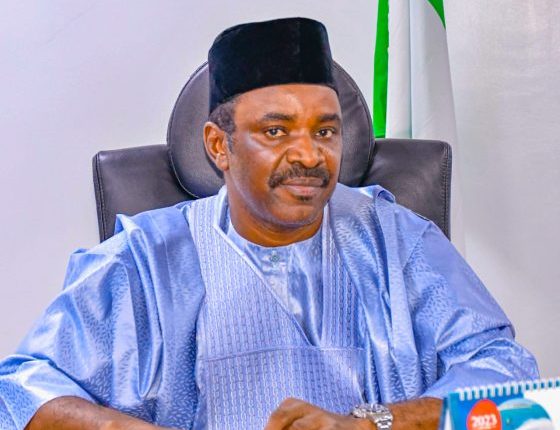

The Minister of Transportation, Mr Said Alkali, says transport sector concessioning in Nigeria is inevitable.
Alkali, said this on Tuesday at a symposium, organised by the International Transport Workers Federation (ITF) National Coordinating Committee (NCC) in Abuja.
The theme of the event was “Nigeria Transport Sectors Concessioning: Focus on Viabilities and Imminent Labour Issues”
Represented by Mrs Ahidenor Cynthia, Director, Road Transport and Mass Transit Administration, the minister said concessioning in transport sector was paramount, maintaining that its success was not automatic.
“It will be measured not only by improved infrastructure or financial returns, but by its capacity to deliver: efficient and affordable transport services, investor confidence and industrial harmony as well as and social protection.
“This will no doubt confirm the reality that viability without labour inclusion is unsustainable while labour protection without efficiency is uncompetitive.
“In order to balance competing interests in this complex project, we must design concessioning frameworks that are economically viable, institutionally sound, and socially responsible, ensuring that Nigeria’s transport sector becomes a driver of inclusive growth and national development,” he said.
The minister gave assurance in facilitating the implementation of anticipated laudable recommendations of the symposium.
Earlier, Mr Nnabue Ben, President, National Union of Air Transport Employee, said ITF was founded in 1896 to unite workers across the world.
Ben, who was also the ITF – NCC Chairman, said ITF brought together seafarers, dockworkers, aviation, railways and road workers in its early days who understood that the challengers of transport work stop not at national borders.
“Over the past century, the ITF has grown into a powerful global federation representing over 20 million worker in more than 150 countries.
“Through wars, globalisation, and major industry change, the ITF has remained committed to protecting workers’ rights, improving safety and welfare, and promoting decent work in all transport sectors.
“Today, the ITF continues to lead international campaigns against exploitation, unsafe conditions and unfair labour practice- while championing genders equality, youth empowerment, and the future of transport work in a rapidly changing world,” he said.
Ben said ITF worked closely with unions in Nigeria through the ITF- NCC to strengthen solidarity, defend workers’ rights and ensure that transport workers have a strong voice in national and global decisions.
Speaking, Prof. Charles Anosike, the Director-General, Nigerian Meteorological Agency (NiMet), said integrating weather forecasting into multimodal transport planning was no longer optional but necessity.
Anoike, who was represented by Oyegade Adeleke, the Deputy General Manager, Climate Services, NiMet, said weather had a direct influence on efficiency, safety and reliability of multimodal transportation.
“Climate variability is real, and more extreme events are expected. Integrating weather forecasting into multimodal transport planning is therefore no longer optional—it is a necessity.
“This is essential for improving efficiency, reducing losses, and building resilient supply chains in Nigeria.
“At NiMet, we are fully committed to this course, and we invite all stakeholders to come on board with us as we work together to provide a safer and more reliable environment for multimodal transportation,“ he said.


NIGERIA DECIDES

 Davido's Net Worth & Lifestyle
