
News
ANALYSIS: FG cancelling poor road contracts as Tinubu pushes renewed hope agenda

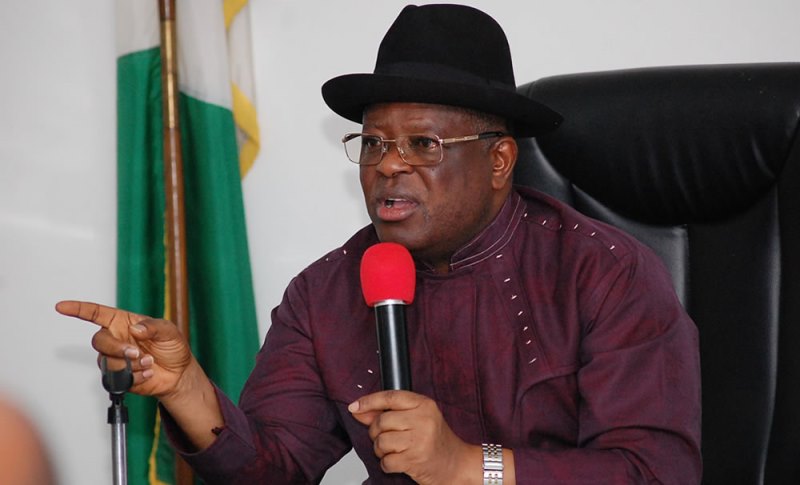

In demonstration of commitment to effective delivery of infrastructure under its Renewed Hope Agenda, the Federal Government has cancelled some road construction contracts across Nigeria.
The government’s new approach to road construction focuses on performance and results instead of allowing projects to drag for years without progress.
This followed President Bola Tinubu’s directive that roads must support economic growth and reduce the suffering of Nigerians.
The president believes that road construction should not be a symbol of waste and neglect.
The Federal Ministry of Works has reviewed many road projects across Nigeria, with contracts cancelled where work is slow or poor in spite of heavy government spending.
According to the Minister of Work, Sen. Dave Umahi, the reviews revealed that many road projects have gone far beyond their deadlines with little work done.
He said that in some cases, contractors completed less than 40 per cent of the work, although more than the full contract timelines had already passed.
Umahi added that some road projects showed almost no progress.
He gave the assurance that under the new policy, such contracts were being cancelled due to expired timelines.
The minister said that the step was necessary to protect public funds and reduce suffering on major roads.
A recent review of road contracts in Kogi State, especially on the Abuja–Lokoja Road, shows how the policy is being applied as some contractors were removed after recording as little as one or two per cent completion after years.
Others were given final warnings and ordered to quickly fix bad sections of the road to allow free flow of traffic.
According to the Director of Press and Public Relations in the Federal Ministry of Works, Mr Mohammed Ahmed, Kogi is not the only case.
Ahmed said in statement recently that similar actions were being taken across the country.
He disclosed that, in South West, federal roads linking Lagos to other states were under close monitoring, adding that contractors had been warned that poor work, delays or safety issues could lead to cancellation of their contracts.
In South South, some contractors have been replaced after failing to meet technical standards in difficult terrain such as the Calabar–Itu Road and parts of the East–West Road.
In South East, long-abandoned roads such as Enugu–Port Harcourt and Aba–Ikot Ekpene roads have been reviewed, with some contracts cancelled and re-awarded to speed up completion.
In North West and North East, in spite of security challenges, contracts have also been reviewed.
Ahmed said that where poor performance could not be justified, projects were cancelled and emergency repairs carried out.
According to him, the government believes that cancelling contracts is the first step.
Ahmed said the ministry had directed emergency repairs on dangerous sections of some roads, immediate filling of potholes, and repairs to road shoulders, as well as re-awarding of projects to contractors with proven ability.
According to him, the goal is to ensure that roads will not become bad while new contracts are being processed.
Many Nigerians have welcomed the government’s decisions, saying it is better to stop failed projects than continue spending money on abandoned roads.
Road users, especially on busy routes such as Lagos-Ibadan Expressway, are convinced that the policy will reduce accidents, delays and travel costs.
A commercial driver, Mr Ambrose Kezie, regretted that bad roads damaged vehicles, increased fuel use and caused long hours in traffic.
He said that ending poorly-handled contracts and bringing capable contractors would make roads safer, shorten travel time and reduce stress.
However, some other road users warn that cancelling contracts could lead to court cases that may delay projects further.
A lawyer, Mr John Ogar, said that contractors whose agreements were terminated might challenge the decisions in court, especially where large sums of money were involved.
According to him, such legal battles could slow down contract re-awarding processes and increase costs, if not carefully managed by the government.
Analysts note that the nationwide cancellation of poor road contracts marks a major break from the past, when many failed projects continued without punishment.
They, however, say cancelling such contracts alone will not fix Nigeria’s roads.
A construction expert, Mr Magnus Ovie, believes that the success of the policy would depend on how quickly new contracts are awarded to capable companies.
According to him, adequate funding and strong supervision are also critical.


NIGERIA DECIDES

 Davido's Net Worth & Lifestyle
