
Health
Diabetes Crisis: Association seeks emergency declaration

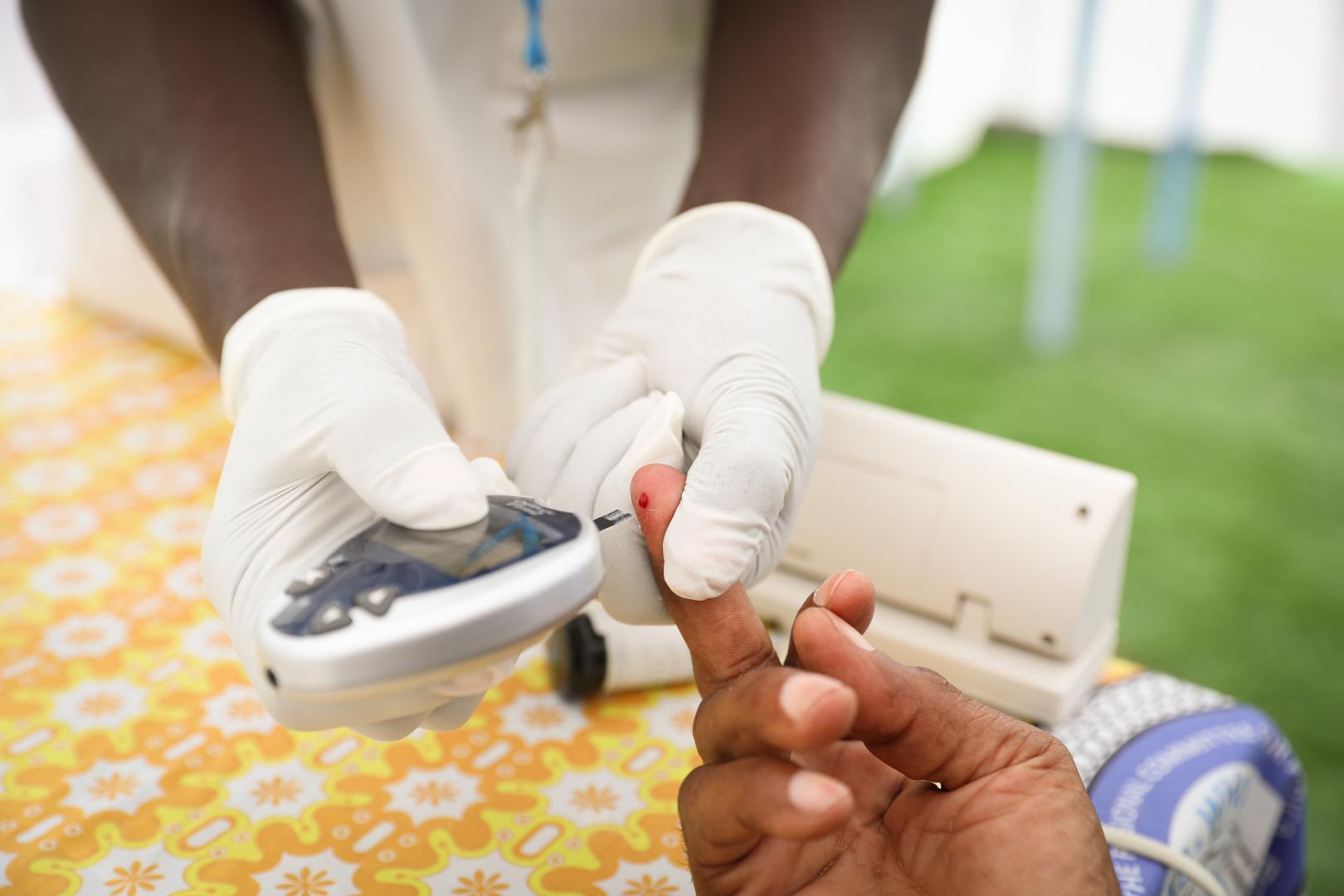

The Diabetes Association of Nigeria (DAN) has urged the Federal Government to declare a state of emergency on diabetes, describing the disease as a silent catastrophe threatening public health nationwide.
President of the association, Prof. Ejiofor Ugwu, made the call in an interview with our correspondent on Tuesday in Abuja, citing alarming mortality figures nationwide and rising burden.
Ugwu said diabetes was already among the top 10 causes of death globally and was projected to become the seventh leading cause of death worldwide by 2030 if current trends persisted.
“In Nigeria, it is estimated that about 30,000 to 40,000 Nigerians die from diabetes every year. You can see that we have a catastrophe on our hands.
“That is why we want the Federal Government to declare a state of emergency on diabetes,” Ugwu said, emphasising urgency.
Ugwu added that urgency and scale were required to address rising national health challenges.
He said declaring an emergency would help the government appreciate the magnitude of the crisis and respond with urgency and scale across all sectors, institutions and affected communities nationwide.
“Government needs to recognise that we have a monster on our hands. You need to appreciate the magnitude of your problem before you can devise means of solving it,” he said.
Ugwu said as part of immediate steps following such a declaration, the government should convene key stakeholders to develop a National Diabetes Policy and Strategic Plan addressing prevention, care, financing nationwide.
He listed stakeholders to include theDAN, the Federal Ministry of Health, the Ministry of Budget and Planning and the National Health Insurance Authority among other relevant bodies.
“What do we do to stem the tide of this scourge that is ravaging the country? That is the question such a roundtable must answer,” he said.
The DAN president said urgent interventions must include subsidising essential anti-diabetic medications and removing import taxes on them to reduce costs and improve affordability for patients across urban rural communities nationwide.
“Most of these drugs are produced outside the country and local manufacturing is negligible.
“By the time import duties are paid, the landing cost becomes very high.
“If government grants subsidy and removes tax on importation, the cost of these drugs will drop significantly and affordability will increase nationwide, for patients, families, and insurers and healthcare providers alike.”
Ugwu also called for the expansion of the National Health Insurance Scheme to comprehensively cover diabetes care, noting that many essential medications, glucose meters and testing strips were currently excluded nationwide.
“In the immediate interval, government needs to expand health insurance to accommodate diabetes care.
“This is very important for sustainable access, equity, protection, affordability, continuity and national resilience,” he said.
On medium- and long-term measures, Ugwu identified weak Primary Healthcare and manpower shortages as major challenges, saying most diabetes specialists were concentrated in urban tertiary hospitals leaving rural areas underserved nationwide.
“If you go to Primary Healthcare Centres (PHC) or general hospitals, you don’t find qualified diabetes care specialists. Patients are often mismanaged and come to tertiary centres with complications,” he said.
Ugwu said although Nigeria had more than 34,000 PHC centres, not all were functional due to lack of equipment, manpower and essential drugs across states, councils, communities, wards, facilities nationwide.
He called for investment in training and deployment of healthcare workers to manage uncomplicated diabetes cases at the primary care level, alongside a functional referral system linking services, facilities, patients efficiently.
The DAN president also stressed the need for a national diabetes registry to track prevalence, treatment outcomes and complications across populations, regions, ages, sexes, facilities, timelines, programmes, policies, planning evaluation nationwide.
“Data is very important. We need to begin to track how many people are developing diabetes, how many are on treatment and what the outcomes are nationally, systematically, and continuously,” he said.
Beyond care, Ugwu emphasised prevention as a critical pillar, warning that Nigeria’s weak health system could not cope with the growing burden of non-communicable diseases threatening sustainability, equity, productivity, longevity, stability, development.
“Prevention is one of our best bets. Diabetes, hypertension and cancers are all on the increase, and our healthcare system is too weak to cushion the effect nationwide,” he said.
He identified obesity, physical inactivity and unhealthy diets as key risk factors, and criticised poor food labelling and unchecked consumption of sugar-sweetened beverages among children, youths, adults, families, communities, schools, and workplaces.
Ugwu called for the revival and strengthening of the sugar-sweetened beverages tax, which he said was discontinued in 2024 in spite of rising consumption, obesity, diabetes, costs, risks, harms, and pressures.
“We are advocating that government should revive that tax and increase it to N200 per litre.
“Ten Naira per litre was too small to make any impact,” he said.
According to him, higher taxation will discourage excessive consumption and help prevent diabetes and other non-communicable diseases through pricing, behaviour, awareness, reformulation, substitution, moderation, education, regulation, enforcement, monitoring, evaluation, policy, and action.
Ugwu expressed hope that sustained advocacy would prompt decisive government action before diabetes claimed even more lives in Nigeria and overwhelmed families, communities, hospitals, budgets, productivity, development, equity, stability, security, and futures.


NIGERIA DECIDES

 Davido's Net Worth & Lifestyle
