
News
X-raying Nigerian military operations in 2025: gains, pressures and the road ahead

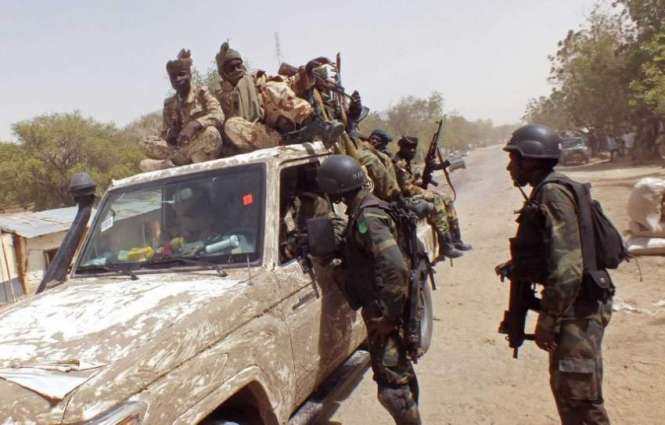

At the close of 2025, Nigeria’s Armed Forces recorded sustained operational activity across all theatres of engagement, reflecting a year of intensified counter-terrorism, anti-banditry and internal security operations.
The year under review was characterised by expanded joint operations, increased deployment of intelligence-led tactics and closer inter-agency collaboration aimed at degrading terrorist and criminal networks, protecting civilians and securing critical national assets.
According to the Defence Headquarters (DHQ), troops neutralised several terrorist and criminal elements, arrested over 4,300 suspects, secured the surrender of more than 1,600 insurgents and rescued thousands of kidnapped victims across the country within the period.
The Chief of Defence Staff (CDS), Gen. Olufemi Oluyede, attributed these outcomes to improved coordination and professionalism across the Armed Forces.
“The successes recorded in 2025 are a direct result of sustained joint operations, effective intelligence utilisation and the resilience of our troops, who continue to demonstrate professionalism in very challenging environments,” Oluyede said.
He stressed that while kinetic operations remain important, public cooperation and trust are critical to long-term success.
“Winning the confidence of the people is as important as winning on the battlefield. Without the support of communities, security efforts cannot be sustained,” the CDS added.
North-East: Sustaining Counter-Insurgency Pressure
In the North-East, Operation HADIN KAI maintained pressure on Boko Haram and Islamic State West Africa Province (ISWAP) elements through coordinated ground and air operations.
The Theatre Commander, Joint Task Force North-East, Maj.-Gen. Abdulsalam Abubakar, said the operational focus in 2025 was to degrade leadership structures and deny insurgents freedom of movement.
“Our operations have significantly disrupted the command and control of terrorist groups, destroyed several camps and forced many of them to surrender,” Abubakar said.
He noted that although the insurgents retained the ability to carry out isolated attacks, their capacity for large-scale operations had been reduced.
“The situation in the theatre has remained relatively stable, and we are seeing gradual improvement in civil activities, including farming, trade and the return of displaced persons,” he added.
North-West: Tackling Banditry and Terrorist Spillover
In the North-West, troops under Operation FANSAN YAMMA confronted armed banditry, kidnapping and emerging terrorist infiltration linked to transnational networks.
DHQ said sustained offensives led to the neutralisation of bandit elements, the rescue of abducted civilians and the recovery of arms, ammunition and illicit funds.
A major development during the year was the execution of precision air strikes against Islamic State-linked enclaves in parts of Sokoto State, conducted in collaboration with international partners.
Military authorities described the operation as part of efforts to prevent terrorist infiltration from the Sahel region.
North-Central: Managing Complex Security Dynamics
Operations ENDURING PEACE and WHIRL STROKE in the North-Central addressed a mix of banditry, terrorism spillover, arms trafficking and communal violence.
Troops arrested hundreds of suspects, disrupted arms supply routes and rescued kidnapped victims across several states.
However, the military acknowledged that farmer-herder clashes and the proliferation of small arms remained major security challenges in the zone.
South-South: Securing Economic Assets
In the South-South, Operation DELTA SAFE focused on curbing oil theft, pipeline vandalism and illegal refining.
The Director of Defence Media Operations, Maj.-Gen. Michael Onoja, said the Armed Forces recorded notable success in disrupting illegal oil activities during the year.
“Our troops thwarted oil theft valued at over ₦8.9 billion, recovered millions of litres of stolen petroleum products and destroyed more than 500 illegal refining sites,” Onoja said.
He added that the operations were critical to protecting national revenue and reducing environmental degradation.
“Oil theft remains a major economic and security concern, and the Armed Forces, working with other agencies, will continue to deny criminal elements freedom of action in the region,” he said.
South-East: Containing Separatist Violence
In the South-East, Operation UDO KA sustained intelligence-led operations against the proscribed Indigenous People of Biafra (IPOB) and its Eastern Security Network (ESN).
DHQ said the operations resulted in arrests, arms recoveries and a reduction in attacks on security personnel and public infrastructure.
According to military authorities, the combination of sustained operations and recent legal developments involving key figures linked to the group significantly degraded its operational capacity.
Air Power and Intelligence as Force Multipliers
Across all theatres, the Nigerian Air Force played a key role in providing surveillance, precision strikes and close air support to ground troops.
The CDS noted that improved intelligence fusion and air-ground coordination had constrained adversaries’ mobility and disrupted their logistics networks.
“The effective integration of air power with ground operations has enhanced our ability to respond swiftly and decisively to threats,” Oluyede said.
Persistent Challenges and Outlook
Despite the gains recorded in 2025, security analysts and military authorities agree that challenges persist. Terrorist and criminal groups continue to adapt, while arms proliferation, porous borders and socio-economic pressures remain major drivers of insecurity.
Onoja said the military remains vigilant and adaptive.
“We are closely monitoring the movement of fleeing terrorists and criminal elements, and we urge citizens to remain vigilant and continue to support security agencies with timely information,” he said.
Meanwhile , the General Secretary, Defence Industries Association of Nigeria (DIAN), Engr. Kola Balogun, commended President Bola Tinubu for creating an enabling environment for the growth of Nigeria’s military industrial base.
Balogun said the Federal Government’s Nigeria First policy provides a critical platform for strengthening local defence capability, adding that indigenous production of military hardware was key to addressing Nigeria’s peculiar security challenges.
He said that most of the security threats confronting the country were local in nature and required locally developed solutions, including both lethal and non-lethal weapons tailored to Nigeria’s operational environment.
According to him, building domestic defence capability would not only enhance national security but also promote technology transfer, domestication of expertise and the growth of human capacity.
He, however, lamented low patronage of locally produced defence equipment despite the capacity available within the country, adding that many local defence firms were undergoing restructuring to correct past gaps and position themselves for sustainable growth.
Looking ahead to 2026, the DIAN scribe said the association would intensify advocacy for improved funding, stronger collaboration and the establishment of new standards to ensure interoperability, serviceability and sustainability of defence equipment.
He said such efforts would also stimulate the growth of a local spare parts industry, reduce dependence on foreign support and guarantee long-term operational readiness of military assets.
Balogun expressed optimism that with sustained government support, Nigeria could evolve into a robust defence industrial complex capable of meeting national and regional security needs.
A military scholar and publisher, Dr Sani Abubakar, commended the US-led military airstrikes on terrorists in Sokoto State on Dec. 25, 2025, but expressed concerns that the Nigerian government couldn’t address the security challenge on its own.
According to him, many Nigerians are happy with the attack, which is a bad sign for the government. Security is the government’s paramount duty, and they shouldn’t surrender it to external powers.
“My assessment of the military’s counter-insurgency efforts is mixed. I commend the new leadership, especially the Chief of Air Staff, for renewed offensives.
“To the military and Defence Ministry, please prioritize the stopping of kidnappings on schools and communities and highway attacks within 100 days,” he said.
As 2025 ends, the Armed Forces of Nigeria say their focus in the coming year will be on consolidating gains, strengthening partnerships and refining strategies to address evolving threats.
For the military, the year under review reflects both progress and pressure — reinforcing the reality that while security gains are achievable, sustaining peace requires continuous effort and national cooperation.


NIGERIA DECIDES

 Davido's Net Worth & Lifestyle
