
Health
Fibroids: Mitigating surgery complications through advanced treatment


The reproductive organs are the key biological components that differentiate women from men.
The organs include the uterus, ovaries, fallopian tubes, cervix and vagina which function together to enable reproduction, pregnancy, and childbirth.
However, one of the most significant reproductive health challenges on the reproductive organ, for women globally, particularly those of African descent, is the uterine fibroids.
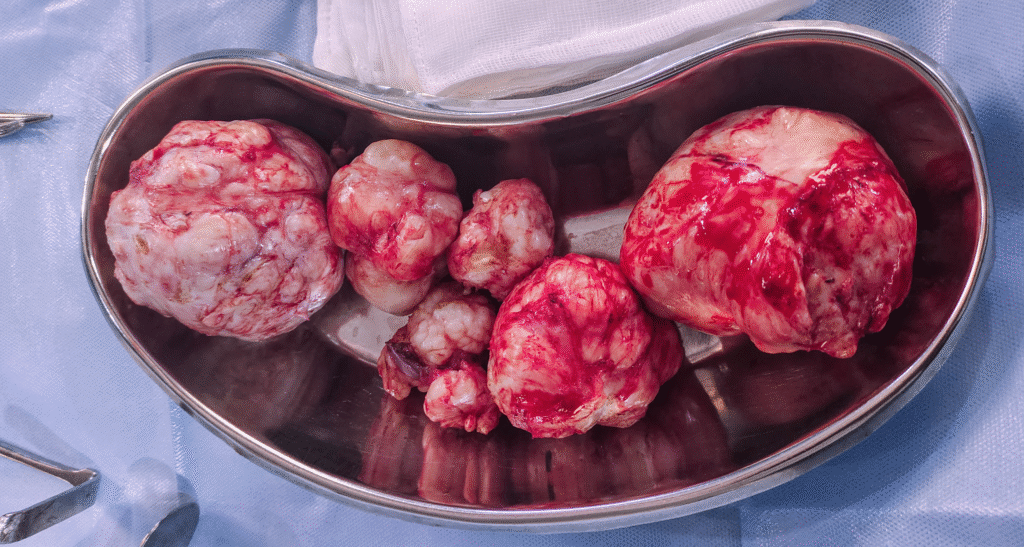
Uterine fibroids, or leiomyomas, are non-cancerous growths of the uterus that often appear during childbearing years.
While these muscular tumors are rarely life-threatening, the World Health Organisation (WHO) say they are a major public health issue for women of reproductive age.
According to WHO, fibroids are non-cancerous tumors that grow in the uterus and are made up of muscle and fibrous tissue.
Treatment ranges from surgery, non invasive procedures, and medications depending on its impact on the individual.
Research over the years has shown that African women have the highest prevalence of uterine fibroids in the world where it is associated with significant morbidity, economic and health systems costs, and occasional mortality.
According to available research, the prevalence of uterine fibroids in Nigeria is significantly high, ranging from 17.9 per cent to 26 per cent.
Studies indicate that fibroids account for a substantial portion of gynecological cases in Nigeria, representing 3.2 per cent to 7.8 per cent of all gynecological issues and a large majority of hysterectomy cases.
While many have successfully undergone fibroid surgery to improve their quality of life or increase their chances of having children, others have died due to complications resulting from this same medical procedure.
Mr Samuel Eze, who lost his wife in 2023 due to complications from fibroid surgery, narrated how she bled to death, noting that all efforts by the medical team to save her in a hospital in Ikotun area of Lagos failed.
Eze noted that his late wife who died in her forties, had several miscarriages which were attributed to fibroid and she was advised to undergo surgery to increase her chances of giving birth.
“If I knew my wife will not survive the surgery, we won’t have gone ahead with it, but she insisted on having the surgery to have her own children,” he said.
These and many more are the ordeal of families still grieving the death of their loved ones who died during or after undergoing fibroids surgery.
Some common complications that could occur from surgery range from haemorrhage, injury to surrounding organs, anaesthesia-related risks and infections, said Prof. Oliver Ezechi, a Director of Research at the Nigeria Institute of Medical Research (NIMR).
However, Ezechi, also a professor of Maternal, Reproductive and Child Health at the Lead City University in Ibadan, noted that pre-operative assessment before surgery was key to identifying any possible complications likely to emanate during surgery.
He noted that some of the reasons why some women opted for fibroids surgery were to improve their quality of life and increase there chances of becoming mothers, heavy bleeding, severe pains, suspicion of malignancy, fertility issues and others.
“Fibroids are non-cancerous tumors of the womb that can significantly impact women’s reproductive health causing symptoms such as heavy menstrual bleeding, pelvic pain, and pressure on surrounding organs.
“The presence of fibroids can also affect fertility and pregnancy outcomes, leading to complications such as miscarriage or preterm birth.
“It is a major cause of ill health and occasional death following surgery in incompetent persons,” he said.
However, Ezechi noted that mortality from fibroids procedures could be averted through advanced treatments.
The expert explained that “apart from surgery, other advanced treatments for fibroids included Hormonal therapies (like GnRH agonists) to help shrink fibroids and manage symptoms, and Uterine Artery Embolisation which cuts off blood supply to fibroids, causing them to shrink.
“Others are MRI-guided focused ultrasound, a non-invasive treatment that uses ultrasound to destroy fibroid tissue and Endometrial Ablation, a procedure that removes the lining of the uterus to reduce heavy bleeding caused by fibroids”.
Ezechi emphasised that each treatment option had its benefits and risks, adding that the choice depended on individual health needs and preferences.
A Consultant Obstetrician and Gynaecologist, Dr James Odofin, explained that most complications that occured during fibroids surgery might not be as a result of the surgical procedure but could also be caused by other medical conditions, hence the need for thorough evaluation before surgery.
Odofin said: “Before any surgical procedure, a patient needs to be thoroughly evaluated to know if the person has any underlying health issue that should be addressed before going for surgery.
” For example, a patient with hypertension or chronic medical illness that was not well optimised before surgery, no matter how simple the procedure is, can have complications aggravated by the surgical techniques or anesthetic agents.
“With just basic tests, an emergency caesarian section can be done to save a mother and child but an elective surgery such as fibroids requires certain investigations called effective and preoperative workup of the patient.”
The consultant who works at the Federal Medical Centre, Ebute Metta, said aversion for surgery in the country and the continent at large prevented patients from seeking timely medical help, adding that patients would usually present late.
As such, he urged that to address most complications associated with fibroids surgery, there was need for patients to be well informed and seek prompt medical attention from competent specialists.
He alsourged the government to increase access to quality care, as well as ensure availability of advanced treatment options to reduce mortality during the procedures.


NIGERIA DECIDES

 Davido's Net Worth & Lifestyle
