
Health
Africa CDC reports new Mpox surges in Madagascar, Comoros despite lifted emergency

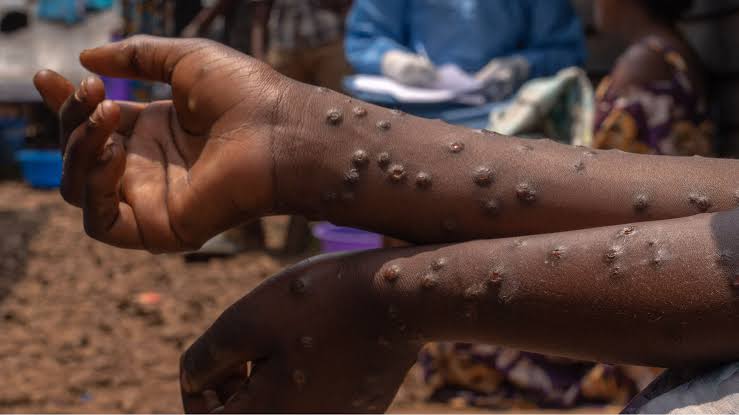

Madagascar and Comoros have recorded new surges in Mpox cases even after the Africa Centres for Disease Control and Prevention (Africa CDC) lifted the disease’s status as a Public Health Emergency of Continental Security, officials said Friday.
Prof. Yap Boum II, Deputy Incident Manager for Mpox at the Africa CDC Incident Management Support Team (IMST), disclosed the developments on Friday during the weekly high-level regional press briefing.
According to him, Mpox remains active in several countries across the continent.
Boum II disclosed that Madagascar had reported 202 confirmed Mpox cases, within 20 of 114 health districts affected.
He said that the strain driving the latest wave was identified as Clade 1B, and health officials described challenges with community-based surveillance, noting that many patients were tested late in their illness, contributing to high test positivity rates.
In the Union of Comoros, he said that authorities had confirmed nine Mpox cases out of nine suspected, with no deaths reported so far.
“The islands have seen heavy weekly movement of more than 2,000 people from Madagascar, underscoring the need for contextualised response measures.
“Africa CDC worked with the Comoros Ministry of Health to pre-position diagnostics and provide training to enhance detection capacity,” he said.
He said that although the emergency status was lifted last week, Mpox had not ended on the continent.
Instead, Africa CDC and member states are implementing a transition roadmap to integrate Mpox into routine surveillance and public health response systems.
“An after-action review is planned to take place in Kinshasa at the end of February to consolidate lessons learned and strengthen future outbreak preparedness,” he said.
He also reiterated Africa CDC’s vision of Africa Health Security and Sovereignty, a strategy anchored in shifting from reliance on external donor support to durable domestic investment and regional solidarity.
“Declining Official Development Assistance has impacted outbreak responses across the region, prompting Africa CDC and the African Union to pursue sustainable health financing mechanisms,” he said.
He said that a central feature of this strategy was the African Epidemics Fund (AFF), designed to ensure rapid access to resources, within 48 to 78 hours, when outbreaks were detected.
He disclosed that Angola had pledged five million dollars toward the AFF, serving as a model for other nations seeking to build resilient health systems.
He highlighted Ethiopia’s successful containment of the Marburg virus outbreak, citing leadership, integrated surveillance, and community engagement as decisive factors.
Routine immunisation campaigns were effectively leveraged to enhance case detection and control efforts.
On cholera, he said that Africa CDC reported that the continent had recorded about 6,000 cases and 93 deaths so far in 2026, with a case fatality ratio of roughly 1.5 per cent.
“The Democratic Republic of the Congo remains a hotspot, with tens of thousands of cases and more than 2,000 deaths,” he said.
He stressed the importance of sustainable water, sanitation and hygiene (WASH) infrastructure and regional cross-border coordination to stem the spread of cholera, particularly in countries such as Mozambique, Malawi, and Zambia, where shared borders elevate transmission risk.
He said that vaccination efforts against Mpox were also underway in several countries.
“Zambia rolled out Mpox vaccination in late December, and a 30,000-dose allocation has been approved for Madagascar.
“Other countries, including Cameroon, Comoros, Uganda, and Liberia, are anticipated to benefit from further vaccine deliveries.
“Countries have used approximately 70 per cent of the Mpox vaccines allocated to them, but many face challenges in operational costs, underscoring the broader need for strengthened health financing at national and regional levels,” he said.


NIGERIA DECIDES

 Davido's Net Worth & Lifestyle
