
BUSINESS
Food security: How Ebonyi is powering Nigeria’s rice revolution

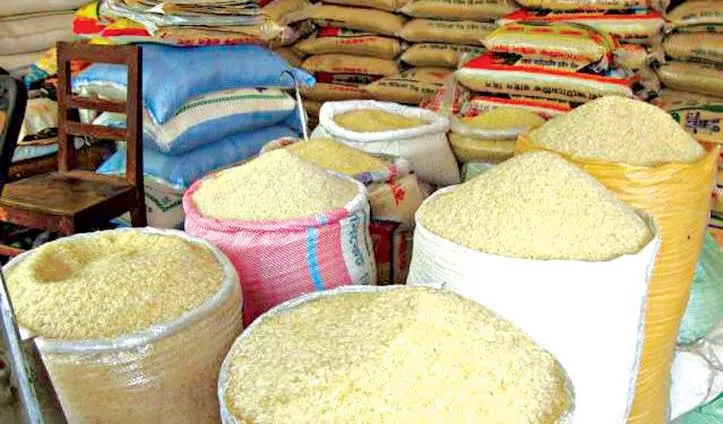

8<strong>Ebonyi, aptly titled the ‘Salt of the Nation,’ is blessed with both vast mineral wealth and fertile plains suited for large-scale cultivation of rice and other agricultural products.
For decades, communities in Abakaliki, Izzi, Ezza, and Ikwo cultivated rice largely through manual methods and mainly for subsistence.
The narrative began to change with increasing calls for food self-sufficiency and deliberate efforts by both federal and state governments to reduce rice importation.
Aside from Ebonyi, other notable rice-producing states in Nigeria are Kebbi, Jigawa, Kano, Ekiti, Benue, Kaduna, Niger, Cross-River, and Ogun.
Today, Ebonyi rice is not just a crop; it is a statement, a movement, and for many, a dependable source of livelihood.
Once relegated to the background of Nigeria’s food conversation, Ebonyi rice has risen from local obscurity to national prominence.
As foreign rice gradually loses its grip on the Nigerian market, the homegrown variety from Ebonyi has become a preferred choice on dining tables, market shelves, and even in government warehouses.
By most accounts, Ebonyi rice is no longer the dusty, stone-filled, hand-milled grain sold only in local markets.
It is now available in supermarkets in Abuja, Lagos, Enugu, and beyond—neatly packaged, well processed, and proudly labelled “Made in Nigeria.”
The transformation of Ebonyi rice did not happen overnight.
In spite of the state’s long-standing potential, factors such as poor government support, limited access to technology, and post-harvest losses previously constrained farmers and exposed them to middlemen.
Agriculture stakeholders say things began to improve significantly from 2015, following federal policies aimed at boosting local rice production.
With the restriction on rice importation, Ebonyi found its footing as a major producer.
Analysts say at present, Ebonyi rice is more than a staple food–locally grown, milled, and packaged; it has become a symbol of pride for Nigerians who increasingly prefer it to foreign alternatives.
Gov. Francis Nwifuru has declared the state’s ambition to become Nigeria’s rice capital, attract investment, boost Internally Generated Revenue (IGR), and create jobs for the growing youth population.
The State Ministry of Agriculture and Natural Resources disclosed that rice production in the state had created more than 20,000 jobs across the value chain—from planting and harvesting to milling and distribution.
The Commissioner for Agriculture and Natural Resources, Mrs Nkechinyere Iyioku, said the government was committed to investing more in rice production while encouraging youth participation in practical agriculture.
Our correspondent recalls that the Ebonyi Government, through the Ministry of Human Capital Development, trained hundreds of youths in agribusiness areas such as poultry, fisheries, rice, and cassava production.
Beneficiaries also received start-up funds of N3 million each.
For the Ebonyi Government, rice has moved beyond agriculture to become a strategic asset.
Mr Linus Obeji, Executive Chairman of the Rice Mill Industry, Abakaliki, attributed the transformation in rice production and branding to consistent government policies and farmer resilience.
According to Obeji, the Federal Government’s Anchor Borrowers’ Programme under previous administrations and ongoing policies under President Bola Tinubu provide smallholder farmers with access to loans, improved seedlings, and fertilisers.
He added that the Ebonyi Government upgraded rice mills, provided tractors, and strengthened cooperative societies, leading to increased output.
“Ebonyi now produces hundreds of thousands of metric tonnes of rice annually, feeding not only its people but many Nigerians across the country and beyond.’’
Obeji noted that improved processing had enhanced consumer perception and preference for local rice.
“Ebonyi rice is known for its natural aroma, absence of chemical preservatives, and nutritional value.
“With modern processing, the once stone-filled grains are now cleaner and comparable to imported brands.”
He, however, identified challenges such as poor road infrastructure, inadequate storage facilities, erratic power supply, insecurity, and climate change-induced flooding.
Obeji said the industry had adopted strict quality control measures, including mandatory de-stoning, sorting, polishing, and proper packaging.
“No rice leaves the mill without complete removal of chaffs and stones.
“The industry is capable of sustaining steady supply within Ebonyi, Nigeria, and even the global market,” Obeji said.
Mr Mathew Nwoko, a rice dealer from Port Harcourt, Rivers, said Ebonyi rice had penetrated major markets across the country and abroad.
He called for sustained government intervention to maintain the growth trajectory.
“In markets from Port Harcourt to Owerri, Asaba, Lagos, Ebonyi rice is becoming a household name; consumers are drawn by its quality and the satisfaction of supporting local farmers,” Nwoko said.
Similarly, Mrs Adaku Chukwubike, a Lagos-based food trader, said demand for local rice in her shop had surged, compelling her to source directly from Abakaliki.
“Since I tasted the rice, I never went back; it is natural, and my customers give positive testimonies,” she said.
A young agripreneur, Mr Eze Nwube, who runs a small rice milling outfit in Onueke, Ezza-South Local Government Area, said agribusiness had transformed his life.
“People mocked me for choosing farming, but today I supply rice to major stores and online buyers,” he said.
An agricultural economist, Mrs Grace Nwafor, stressed the need for massive investment in modern farming technology to enhance global competitiveness.
She called for improved access to high-yield seeds, irrigation systems, and youth-focused agricultural training programmes.
Dr Ignatius Unah, Chairman of the All Farmers Association of Nigeria (AFAN) in the state, urged the federal and state governments to expand access to farm inputs and mechanised farming.
Unah acknowledged the state government’s support but noted that rising input costs remained a challenge for many farmers.
“The government’s subsidy on fertilisers and agrochemicals is crucial for food security and supporting smallholder farmers,” he said.
A local farmer, Mr Nwokpor Nicholas, said rice farming had become profitable, attracting buyers from Port Harcourt, Benin, and other cities.
“Our children now attend school through rice proceeds; rice farming has become a viable business,” he said.
NAN reports that as of December 2025, the cost of rice had dropped significantly, with a 50kg bag selling for between N30,000 and N45,000, compared to N65,000–N90,000 recorded between March and June.
Within that period, a 25kg bag sold for between N14, 000 and N25, 000, depending on the grade and brand.
Agri-enthusiasts in Ebonyi say there is still a need to improve road infrastructure, boost storage capacity and power supply, enhance security, and mitigate climate-induced flooding to bolster rice production.
Given these developments, stakeholders say Ebonyi is on track to be a game-changer in Nigeria’s quest for food security.


NIGERIA DECIDES

 Davido's Net Worth & Lifestyle
