
News
Blue economy, key to Nigeria’s sustainable future- Onuigbo

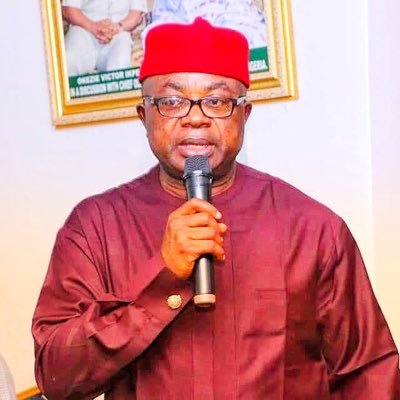

A former House of representative member and climate change advocate, Sam Onuigbo, has described blue economy as a critical pathway to Nigeria’s sustainable development.
He also said blue economy offers the country opportunity for diversification and climate resilience, urging policymakers to fully mainstream climate action across all sectors of national planning.
Onuigbo, who is the Governing Board member representing South East on the North East Development Commission (NEDC), made the call in Abuja.
He spoke while delivering a goodwill message at the public presentation of a new book entitled: ” Blue Economy: Gateway to a Sustainable Future,” authored by Dr Chika Chukwudi.
The event attracted policymakers, academics, development experts and stakeholders in the climate and sustainability space.
Congratulating the author, Onuigbo said the publication came at a defining moment in Nigeria’s development journey.
This, he said, was happening at a time when sustainability had moved from being aspirational to becoming fundamental to economic resilience, environmental protection and inter-generational prosperity.
According to him, as the sponsor of the Climate Change Act, 2021, he remains deeply aware that Nigeria’s future depends on how effectively climate action is embedded across all sectors of the economy.
He said the Act provides a robust legal and institutional framework for coordinated climate action involving government institutions, private sector, civil society and development partners.
He recalled that President Bola Tinubu had described the fight against climate change not only as an environmental necessity but also as a global economic opportunity.
Onuigbo said this vision had found strong expression in the growing focus on blue economy as a catalyst for sustainable growth.
He said the Climate Change Act explicitly recognised nature-based solutions as essential tools for reducing greenhouse gas emissions and mitigating climate impacts.
Onuigbo pointed out that the law also provides for the development of Natural Capital Accounting, including collaboration with the National Bureau of Statistics, to properly value ecosystems such as oceans, wetlands, mangroves and coastal habitats.
The former lawmaker commended the Tinubu administration for taking concrete steps to implement the Act, particularly through the establishment of the Federal Ministry of Marine and Blue Economy.
According to him, the ministry is strategically positioned to maximise Nigeria’s 853 kilometres of coastline and its vast maritime area, while promoting sustainable economic growth and job creation.
The ministry, he said, is expected to coordinate key sectors such as maritime transport, fisheries, aquaculture, coastal tourism, offshore energy and inland waterways within a sustainable development framework.
Onuigbo also outlined other climate-related initiatives of the current administration, including the National Carbon Market Activation Policy aimed at generating up to 3 billion dollars annually by 2030.
Others, he said, were the National Carbon Registry, the operationalisation of the Climate Change Fund and the Presidential Committee on Climate Action and Green Economic Solutions.
He said Chukwudi’s book provides timely insights that would enrich policy formulation, guide industry practice and advance academic discourse.
He urged Nigerians and policymakers to acquire the book and deepen their understanding of blue economy.
Onuigbo also called on the Federal Ministry of Education to implement provisions of the Climate Change Act that mandate the integration of climate change studies across all levels of education.
He applauded the author, organisers and stakeholders for strengthening Nigeria’s climate and sustainability architecture through the initiative.


NIGERIA DECIDES

 Davido's Net Worth & Lifestyle
