
Health
Ending incessant health workers’ strikes

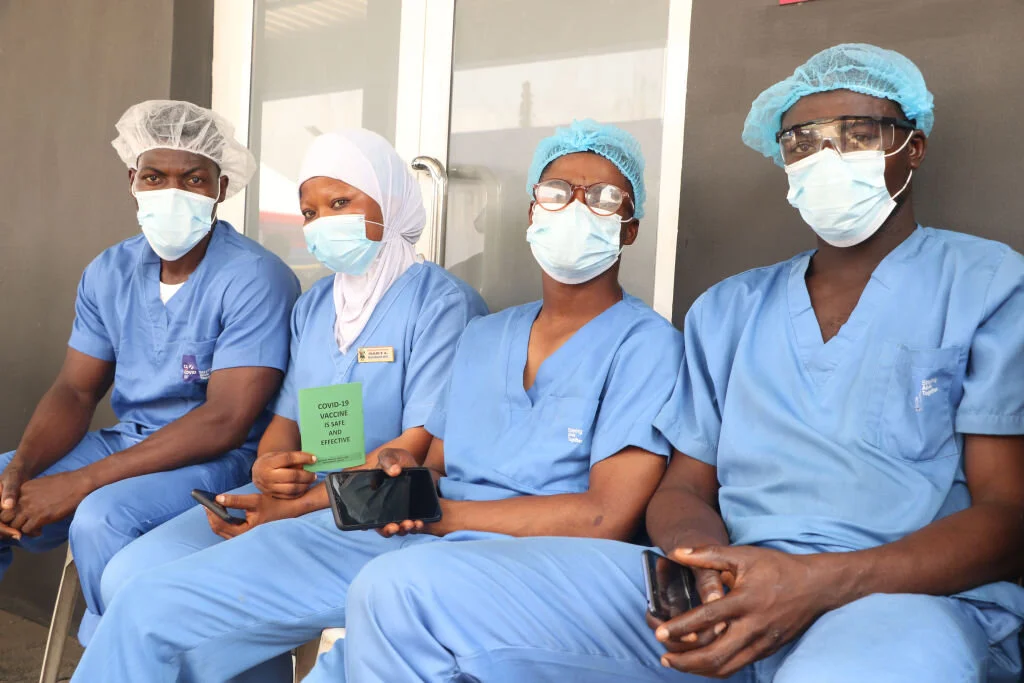

For decades, Nigeria’s healthcare system has been held in a tight grip by recurring industrial actions, with a cycle of ultimatums, warning strikes and indefinite industrial action.
These disruptions have become a grim and agonisingly regular occurrence.
Even in the turn of the New Year, the sector continues to face turbulence over salary adjustments and working conditions.
Recently, after 84 days of downing tools, the Joint Health Sector Unions (JOHESU) suspended its nationwide strike following an agreement with the Federal Government to implement unsettled salary adjustments and other outstanding demands.
The suspension was announced in a communiqué jointly signed by JOHESU National Chairman, Mr Kabiru Ado-Minjibir, and National Secretary, Mr Martin Egbanubi.
“After exhaustive deliberations and review of the terms of settlement of the conciliation meeting, the expanded NEC-in-Session voted unanimously to suspend the ongoing indefinite nationwide strike action to allow for the implementation of the FG-JOHESU Terms of Settlements,” the communiqué read.
According to the communiqué, key resolutions include the commencement of Collective Bargaining Agreement (CBA) negotiations and immediate prioritisation of outstanding issues on the adjustment of the Consolidated Health Salary Structure (CONHESS).
While the suspension of the strike comes as a relief to many, some stakeholders are questioning why non-implementation of agreements often triggers such strikes.
In the case of JOHESU, the strike was called on Nov. 15, 2025, as a result of the non-implementation of a 2014 demand for CONHESS adjustment and other outstanding welfare issues.
It is important to note that JOHESU only constitutes a fraction of workers’ unions in the health sector, as its membership constitutes health workers such as laboratory technicians, pharmacists, health registrars among others.
Recall that JOHESU’s counterparts in the Nigerian Association of Resident Doctors (NARD) only recently suspended a planned nationwide strike scheduled for Jan. 12.
The decision to suspend the strike followed negotiations with the government, but the union issued a 4-week ultimatum to address demands.
NARD is demanding the payment of 2025/2026 Medical Residency Training Fund (MRTF), 25-35 per cent CONMESS arrears, and improved and safe working environments.
The suspended strike was supposed to be a follow up to NARD’s strike in late 2025 concerning unpaid salaries, poor working conditions, and inadequate infrastructure.
Also, in August 2025, the National Association of Nigeria Nurses and Midwives (NANNM) had to force the Nigerian government to the negotiating table after a four-day strike.
The association was demanding, among other things, an end to unsafe staffing ratios, poor wages, and failure to gazette the 2016 Nurses Scheme of Service.
In the Memorandum of Understanding (MoU) signed with NANNM, the government agreed an accelerated implementation of some of the union’s demands within four weeks of the formalisation of the MoU.
Experts such as Dr Obinna Oleribe, a Public Health Management Consultant, have constantly emphasised that the first step towards ending incessant strikes by health workers is to end institutional distrust fueled by years of unfulfilled promises.
They point out that the primary trigger for strikes is not just the demand for more money, but the failure of the government to implement signed MoU.
“What is the essence of going into an agreement with a group, signing that you will implement your side of the bargain at clearly defined timelines only for you to renegade?
“How do you want the other party to perceive you when you can’t fulfill a promise you made willingly?” a health practitioner, who prefers anonymity, asked.
He said it had become typical of the government to treat industrial disputes with a “fire brigade” approach.
He said there had to be a fundamental shift in how the government and other stakeholders approach labour relations.
“It is not peculiar to the health sector; a similar approach is deployed in responding to labour disputes in other sectors such as education, petroleum, judiciary, and so on,” he said.
To this end, some stakeholders suggest the establishment of a National Health Labour Relations Commission to serve as a permanent mediator that tracks and enforces the implementation of agreements.
However, beyond non-implementation of agreements, some stakeholders have also identified inter-professional rivalry as a driver of incessant strikes in the health sector.
They say the rivalry between doctors (NMA/NARD) and other health professionals (JOHESU) often comes to the fore when one group receives a pay rise and the other often goes on strike to seek fairness.
JOHESU leaders such as Felix Odusanya have been on record arguing for a “presidential prerogative” to adjust the CONHESS to match the Consolidated Medical Salary Structure (CONMESS) adjustments.
To address this rivalry challenge, experts recommend a unified salary structure or a transparent, job-evaluation-based system.
It is therefore heartwarming that the Federal Government has unveiled a structured framework aimed at resolving protracted industrial disputes in order to restore harmony in the nation’s health sector.
Recently, the National Salaries, Incomes and Wages Commission (NSIWC) also noted that a comprehensive job evaluation is currently underway that is essential to determining fair placement for all cadres, thereby reducing the supremacy friction.
According to stakeholders, it is imperative for the government to pay better attention to improving the welfare of health workers, as well as providing modern infrastructure if it wishes to end the spate of strikes.
The Minister of State for Health, Dr Iziaq Salako, recently highlighted that excessive work hours and poor environments pose risks to both staff and patients in public hospitals.
Stakeholders, therefore, urge the government to continue the aggressive recruitment seen in 2024 and 2025 (over 37,000 new clinical staff) to reduce the workload that leads to burnout.
They also commend the Federal Government for recently approving an upward review of the retirement age for skilled clinical health professionals in federal tertiary hospitals and centres.
Under the new arrangement, skilled clinical health professionals retirement age has been increased from 60 to 65 years of age, or from 35 to 40 years of service, whichever comes first.
Experts say the policy will ensure the retention of specialised skills, strengthen manpower capacity, and ensure employment security.
“Evoking the policy of “no work, no pay”, often used as a deterrent, should also be abolished because it only toughens the resolve of unions and deepens animosity,” an expert said.
He warned that ending the incessant health workers’ strikes requires the government to treat them as partners in progress rather than adversaries.
Ultimately, experts warn that it will be difficult to have a healthy nation if those who provide health are themselves in a state of professional despair.


NIGERIA DECIDES

 Davido's Net Worth & Lifestyle
