
ECONOMY
Lokpobiri urges African nations to embrace energy mix, deepen collaboration

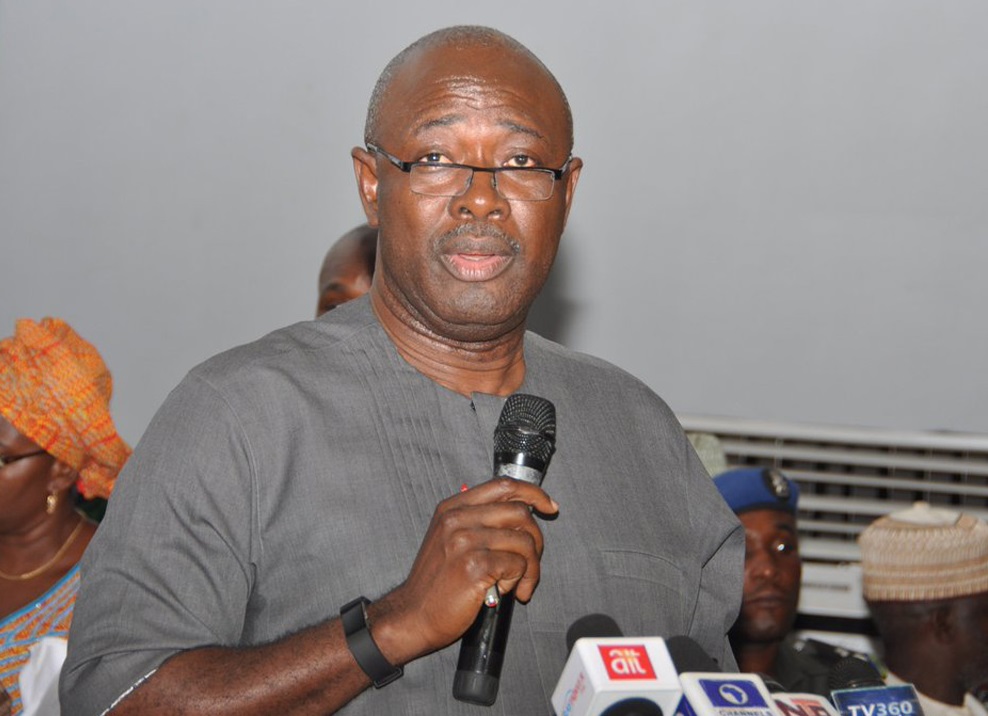

Minister of State for Petroleum Resources, Mr Heineken Lokpobiri, has urged African countries to push for a shift in global energy conversations, from an exclusive focus on energy transition to a more realistic and inclusive energy mix.
Lokpobiri said Africa must be allowed to responsibly harness its oil and gas resources to tackle energy poverty and fast-track development, insisting that fossil fuels will remain critical to the continent’s growth for decades to come.
He made the call on Tuesday in Lagos at the 10th Sub-Saharan Africa International Petroleum Exhibition and Conference (SAIPEC), which marks a decade of engagement among energy leaders across the continent.
Our correspondent reports that the 2026 edition of SAIPEC has the theme, “Celebrating a Decade of Energy, Oil, and Gas Innovation in Sub-Saharan Africa”.
According to Lokpobiri, global thinking on energy is gradually evolving, with international institutions now recognising that a balanced energy mix—rather than an abrupt exit from fossil fuels—is essential for sustainable growth, especially in developing regions.
He said, “The global discussion has clearly shifted from energy transition to energy mix.
“For over a year, I have maintained that Africa must be allowed to explore and utilise its resources in a responsible and environmentally sustainable manner for the benefit of its people.”
He said recent policy adjustments by the International Energy Agency (IEA) had validated Africa’s long-standing position.
“I am happy today that the IEA has changed its position to energy mix,” Lokpobiri said.
Referencing the agency’s 2025 outlook, he noted that the world would require at least 700 billion dollars in investment, about 540 billion dollars annually, to avert a global energy crisis over the next 25 years.
Lokpobiri stressed that oil and gas would continue to dominate global energy demand, citing projections from the Organisation of Petroleum Exporting Countries (OPEC) and other bodies.
This, he maintained, showed that fossil fuels would account for more than 50 per cent of global energy consumption for the foreseeable future.
“In Africa, we have only scratched the surface of our energy potential.
“That is why I am urging everyone to change the narrative from energy transition to energy mix,” he said.
He described Africa as a casualty of global emissions politics, noting that the continent contributed less than four per cent of global carbon emissions, compared with 4.8 per cent by the United Kingdom, while the United States and China together account for about half of global emissions.
“Why should the victims cry louder than the sinners?” he asked, adding that many of these countries continue to export oil and gas,” he added.
The minister commended the Petroleum Technology Association of Nigeria (PETAN) for convening stakeholders across Africa to shape a sustainable energy future.
He commended indigenous companies for expanding capacity and delivering services beyond Nigeria.
He urged African service companies to move beyond intermediary roles and deepen local value creation, warning that high production and service costs were undermining competitiveness.
The minister said, “We cannot afford to remain perpetual middlemen,” he said.
“Africa has grown capacity, and we must deploy it efficiently.”
Lokpobiri also highlighted Africa’s vast market potential, noting that the continent spends over 120 billion dollars annually on imported oil and gas goods and services.
“Even if African companies retain just 20 per cent of this value, the impact would be transformative,” he said.
On financing, the minister described access to capital as a major constraint, expressing optimism about the African Energy Bank, whose headquarters Nigeria recently handed over to its promoters.
He disclosed that Nigeria has covered about 70 per cent of its capital subscription and pledged to bridge any shortfall required to ensure the bank’s take-off.
“Africa itself has enough capital, over four trillion dollars in pension funds, insurance assets and sovereign wealth fund.
“The challenge is unlocking this capital to finance Africa’s oil and gas projects,” Lokpobiri said.
He urged SAIPEC and industry stakeholders to focus on practical financing solutions and long-term planning.
“As you celebrate 10 years, also set an agenda for the next 10 years. Any association without projections is stagnant,” he said.
Lokpobiri assured participants of the Federal Government’s commitment to working with SAIPEC, PETAN and other stakeholders to address Africa’s energy poverty and strengthen energy security.
In her remarks, the Chief Executive of the Nigerian Upstream Petroleum Regulatory Commission (NUPRC), Mrs Oritsemeyiwa Eyesan, called on African countries to deepen investment in capital, technology and governance to achieve sustainable energy growth.
Eyesan said Africa’s progress depends on coordinated strategies focused on capital mobilisation, technology deployment, workforce development and predictable regulatory frameworks.
“Collectively, Africa must stay focused on attracting and sustaining the capital needed for new discoveries and continued production,” she noted.
She stressed that stable, transparent and rules-based governance systems are essential to investor confidence, adding that while foreign investment remains important, domestic capital formation is equally critical.
“Domestic capital brings stronger commitment and creates enduring opportunities for development,” Eyesan said.
She noted that African independent operators are increasingly driving investment and project execution in Nigeria and described the African Energy Bank as a major milestone in strengthening the continent’s financial capacity.
Eyesan also highlighted the role of technology and innovation in improving efficiency, reducing risk and unlocking frontier resources, calling for greater technology transfer in seismic imaging, drilling and petroleum operations.
She urged structured knowledge-sharing across the continent, saying Nigeria’s experience in onshore and deepwater operations should be leveraged more widely.
Eyesan warned that global interest in Africa’s resources does not automatically translate into final investment decisions, stressing the need for strong institutions and policy consistency.
She reaffirmed that the Petroleum Industry Act (PIA) 2021 has strengthened Nigeria’s regulatory framework, positioning the NUPRC as an enabler of investment.
As part of efforts to expand access to resources, she announced the launch of Nigeria’s 2025 oil and gas licensing round, offering 50 blocks across diverse terrains, and invited investors from Africa and beyond to participate.
She added that regional cooperation,particularly in gas and power infrastructure, was improving energy access, reliability and affordability across the continent.
According to Eyesan, SAIPEC 2026 reflects this collaborative vision by bringing markets together, attracting investment and positioning Africa as a reliable and responsible energy partner.
“As we engage in discussions, exhibitions and networking sessions, I urge participants to see this platform as a call to partnership and purposeful action for sustainable investment, shared prosperity and energy security,” she said.


NIGERIA DECIDES

 Davido's Net Worth & Lifestyle
