
Aviation
Nigeria’s air cargo reforms crucial for ACTFTA gains-centre

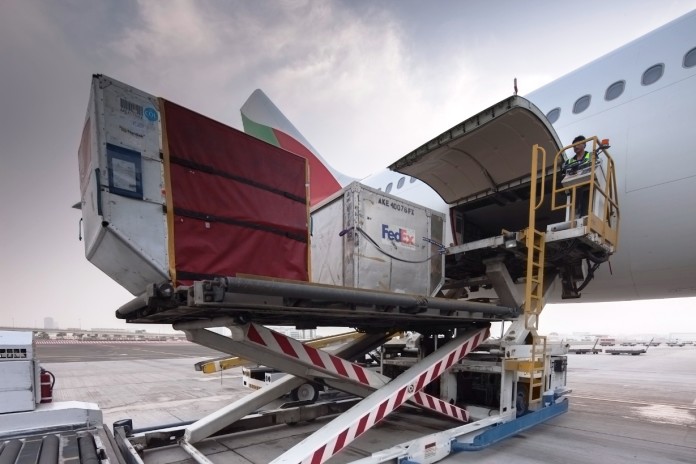

The Sea Empowerment Research Centre (SEREC) says repositioning Nigeria’s air cargo governance is critical for African Continental Free Trade Area (AfCFTA) competitiveness, trade facilitation and national economic growth
SEREC made this known in a policy brief issued by its Head of Research, Dr Eugene Nweke on Wednesday in Abuja.
Our correspondent reports that the brief was follows a recent tariff adjustment dispute between the Federal Airports Authority of Nigeria (FAAN) and freight forwarders and air cargo agents.
FAAN had announced plans to review upwards air cargo handling and port charges, but it was strongly opposed by Freight forwarders and cargo agents before a compromise was reached on Monday.
Nweke said that in the evolving AfCFTA environment, air cargo played a decisive role in facilitating high-value and time-sensitive intra-African trade.
He said it also supported non-oil exports like agro-produce, pharmaceuticals and manufactured goods, while enabling Nigeria’s participation in regional value chains and enhancing national competitiveness relative to peer African aviation hubs.
“Globally, air cargo is increasingly recognised as critical trade infrastructure, not a subsidiary aviation function.
“Countries that succeed under AfCFTA will be those that minimise logistics costs, ensure predictability and operate trusted, secure supply chains,” he said.
According to him, the government should introduce AfCFTA-sensitive safeguards by protecting priority export sectors from excessive cost escalation during its implementation phase.
“Ensure aviation charges support, rather than undermine regional trade competitiveness.
“Air cargo policy must evolve into a strategic enabler of trade, competitiveness and economic growth.
“The Ministry of Aviation and Aerospace Development, acting on behalf of the Federal Government, is uniquely positioned to drive holistic air cargo reform, restore stakeholder confidence,” he said.
Nweke also urged government to align aviation policy with national trade and AfCFTA objectives.
He noted that decisions taken presently would determine whether Nigeria would emerge as a leading AfCFTA air cargo hub or cede that advantage to competing African economies.
He said Nigeria’s air cargo system, however, continued to exhibit “fragmented governance, inconsistent policy implementation, weak linkage between tariffs and service performance and underutilisation of internationally recognised regulated agent regimes.”
These gaps, he warned, could make Nigeria a high-cost, low-efficiency cargo hub, threatening government efforts to diversify exports and expand trade.
He urged the Federal Government to elevate air cargo to a national trade policy priority by officially recognising it as a strategic trade infrastructure critical to AfCFTA participation.
Nweke underscored the importance of integrating air cargo policy into national trade, export and logistics strategies.
He said the government should institutionalise a permanent Air Cargo Policy and Tariff Framework through a National Air Cargo Economic and Trade Facilitation Committee.
The SEREC boss said the committee should include the FAAN , the Nigerian Civil Aviation Authority, Customs, airlines, freight forwarders, exporters and other relevant MDAs.
The committee, he added, should be mandated to conduct economic impact assessments and stakeholder validation before any tariff adjustments.
Nweke further urged the government to fully operationalise and incentivise Regulated Air Cargo Agent Regime by strengthening and enforcing it as a trusted supply-chain model.
Tariffs, he said, should align with performance and value creation by linking any increase to clear service benchmarks, infrastructure upgrades and efficiency gains.
“Implement phased and differentiated tariffs, especially for export-oriented and AfCFTA-priority goods.
“Accelerate digitalisation and cargo community systems by strengthening and deploying a National Air Cargo Community System integrating FAAN, Customs, airlines, handlers and agents,” he said.
Nweke added that SEREC was committed to provide further technical support, comparative policy analysis and stakeholder facilitation in advancing cargo reforms.


NIGERIA DECIDES

 Davido's Net Worth & Lifestyle
