
News
FG reiterates commitment to strengthen Strategic Catchment Management Plans


The Federal Government on Tuesday reiterated its commitment to
strengthening climate resilience plans , restore degraded landscapes, and empower communities to manage their resources sustainably.
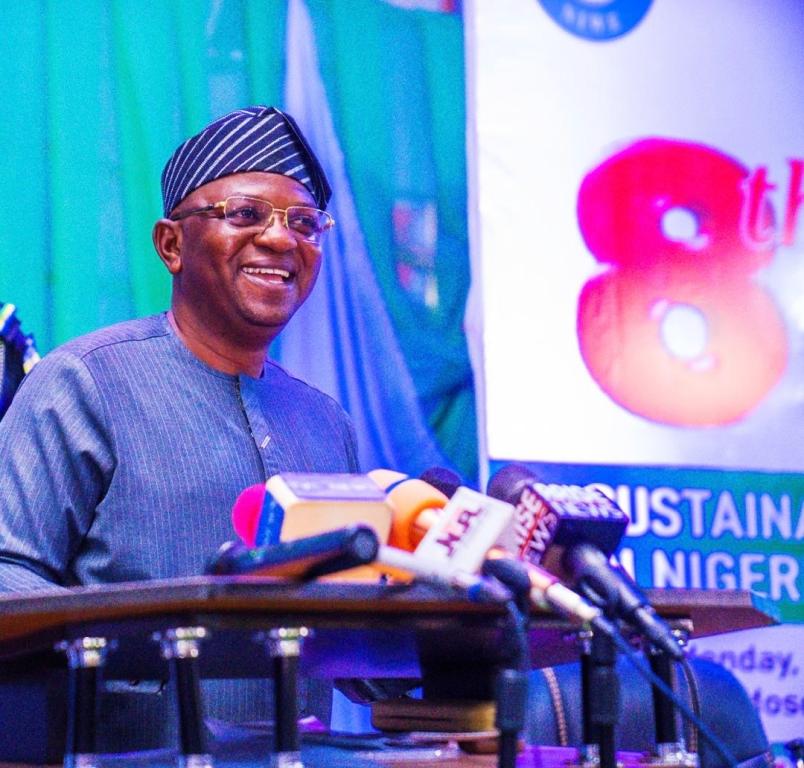
Prof. Joseph Terlumun, the Minister of Water Resources and Sanitation said this at the Workshop for the Presentation and final Validation of Nine (9) Strategic Catchment Management Plans, under the ACReSAL Project.
“Our goal is clear: to strengthen climate resilience, restore degraded landscapes, and empower communities to manage their resources sustainably. The 20 Strategic Catchment Management Plans are at the heart of this effort.
“As we meet here in Abuja, millions of our fellow citizens in the 19 Northern States and the FCT face tough daily battles: advancing deserts, unreliable rains, degraded farmlands, and shrinking water bodies.
“These are not abstract problems they threaten the food on our tables, the income of our farmers and herders, and the stability of our communities.
“The ACReSAL Project represents Nigeria’s bold response to these challenges. As the anchor Ministry, the Federal Ministry of Environment, working closely with Water Resources and Agriculture, is proud to lead this initiative,” he said.
The minister said that the project provides the blueprint for integrated action, identifying priority areas, mobilising resources, and coordinating efforts across sectors and stakeholders.
Dr Joy Agene, the World Bank Task Team Leader, said that the gathering marked an important milestone in Nigeria’s collective efforts to strengthen sustainable water resources management and enhance climate resilience across the catchments that so many communities depend upon.
“The World Bank recognises the immense dedication, technical expertise, and collaboration that have shaped the strategic documents being validated today.
“Effective Catchment management is not only a technical endeavour it is a cornerstone for resilient livelihoods, ecological stability, and long-term development.
“The work you are validating represents the voices of communities, the insights of practitioners, and the commitment of government and development partners to safeguarding these critical landscapes.
Agene said that as climate change continues to intensify pressures on water systems, it is essential that Nigeria’s strategies are evidence-based, inclusive, and forward-looking.
“Today’s validation process is an opportunity to build consensus, refine priorities, and ensure that interventions are practical, sustainable, and aligned with national goals.
“The World Bank remains fully committed to supporting the government and all stakeholders in advancing integrated Catchment planning,” she said.
Mr Abdulhamid Umar, the National Project Coordinator for ACReSAL said that the effects of desertification, drying rivers, and degraded farmlands are not distant stories they are realities in our homes and communities across Northern Nigeria.
“A key pillar of this work has been the development of 20 Strategic Catchment Management Plans, our roadmap to restore watersheds, promote sustainable farming, and protect the environment for generations,” Umar said.
He added that Catchment is also a guide to where ACReSAL would invest next, like in tree planting, better water management, climate-smart agriculture, and quick-win actions that bring immediate benefits to households and farms.
Mr Chuka Ofodili Consultant at Mecon Geology and Engineering Services LTD said that the Malenda Catchment is a strategically important multi-state watershed spanning parts of Kwara, Kebbi, Niger, and Zamfara States.
He said the catchment is anchored around the Malenda River system and its tributaries, the basin drains into the River Niger corridor and supports irrigation agriculture, livestock production, inland fisheries, and rural water supply across both upland and floodplain environments.
“It’s savanna ecology, extensive floodplains, and forest reserves within the Borgu, Kontagora axis. It is regionally significant for food security, biodiversity conservation, and flood regulation.
“The catchment’s role is in sustaining agrarian livelihoods, regulating seasonal flows into the Niger system, and buffering climate variability, positions.
“It is a critical landscape for integrated watershed management and climate resilience planning in north-central and north-western Nigeria.


NIGERIA DECIDES

 Davido's Net Worth & Lifestyle
