
ECONOMY
Edun seeks fiscal reforms to curb illicit financial flows in Africa

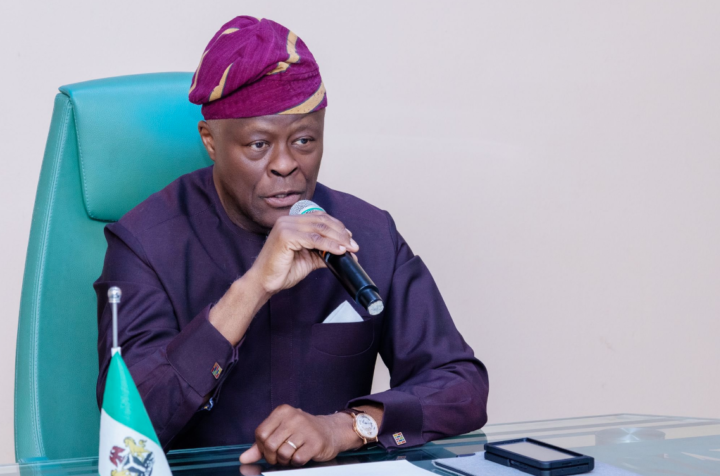

Mr Wale Edun, the Minister of Finance and Coordinating Minister of the Economy has called for urgent fiscal reforms to curb illicit financial flows in Africa.
Edun made the call at the opening of the fifth session of the African Union Sub-Committee on Tax and Illicit Financial Flows of the Specialised Technical Committee on Finance, Monetary Affairs, Economic Planning and Integration (STC – FMAEPI), on Tuesday in Abuja.
He said that Africa stood at a defining moment where the urgency for reform was no longer in doubt, but required bold and decisive actions to unlock economic potential and strengthen Africa’s domestic resource mobilisation efforts.
According to him, Africa’s over 1.4 billion population and vast resources can only translate into prosperity through effective mobilisation and management of domestic financial resources.
He said that global shifts in trade, finance and cooperation frameworks had reinforced the need for African countries to rely more on their institutions and internal capacities.
The minister said that sustainable development could not depend solely on debt, aid or foreign investments, but domestic resource mobilisation as the foundation for long-term growth.
He said that Africa aimed to finance up to 90 per cent of its development needs internally, in line with the African Union’s Agenda 2063 Development Blueprint.
Edun, however, lamented that illicit financial flows cost the continent about 88 billion dollars annually, depriving critical sectors like healthcare, education and infrastructure of needed funding.
He also identified key challenges facing Africa to include tax evasion, weak institutional capacity, limited economic diversification and continued reliance on external financing sources.
The minister said that the agenda 2063 provided a clear reform pathway through improved tax systems, enhanced governance, financial inclusion, capital market development and efforts to curb illicit financial flows.
He said that the leadership of President Bola Tinubu had implemented tax policies to simplify the system, expand the tax base and ease the burden on vulnerable citizens.
Edun said that measures such as fuel subsidy removal, exchange rate unification and improved transparency in oil revenue management had strengthened fiscal discipline and investor confidence.
According to him, Nigeria also introduced a National Single Window system to enhance trade efficiency and reduce leakages associated with illicit financial practices.
He said that the reforms had led to improved non-oil revenue performance, stronger fiscal buffers and enhanced international cooperation in tracking illicit financial transactions.
Edun said that Africa’s fiscal reform priorities must include broadening the tax base, strengthening public financial management and promoting domestic savings and financial inclusion.
He called for robust capital market development and stronger cross-border collaboration, to effectively combat illicit financial flows across the continent.
The minister said that sustainable reform required strong institutions, digital infrastructure, regional cooperation and active citizen participation, to ensure transparency and accountability in governance.
Edun said that successful reforms would enhance economic stability, reduce vulnerability to external shocks and create fiscal space for investment in critical sectors of the economy.
He urged African leaders to demonstrate courage, discipline and collective responsibility in implementing reforms that would drive inclusive growth and long-term development across the continent.


NIGERIA DECIDES

 Davido's Net Worth & Lifestyle
