
ECONOMY
Middle East crisis unlikely to derail stock market performance — Uwaleke

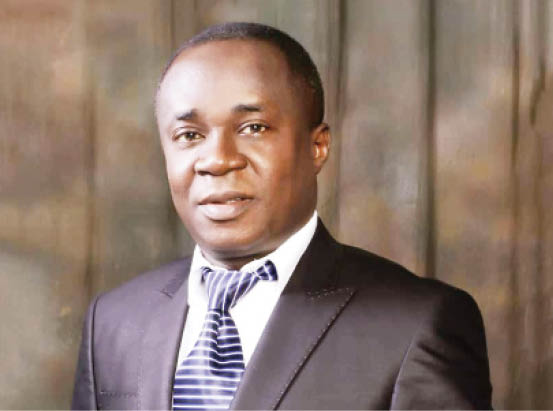

The United States-Israel-Iran tensions are unlikely to significantly derail the stock market from its performance in the second quarter (Q2), Prof. Uche Uwaleke says.
Uwaleke, the President of the Capital Market Academics of Nigeria (CMAN), disclosed this in an interview with our correspondent on Wednesday in Abuja.
He said the resolution was due to the domestic orientation of the market.
Uwaleke said the dominance of domestic investors also insulated the market from global shocks especially the recent middle East crisis in the first quarter (Q1).
He said with the successful completion of banking recapitalisation and the potential listing of the Dangote Refinery, the market outlook remained constructive for the rest of 2026.
Uwaleke said the banking sector was likely to remain a key driver of the market particularly Tier-1 banks, due to post-recapitalisation expectations and strong earnings outlook.
He said consumer goods and industrial stocks, especially those benefiting from improved foreign exchange access and reduced input cost volatility would perform well.
Uwaleke added that energy-related players would attract attention, particularly with the anticipated listing of the Dangote Refinery before the end of third quarter, which could be a major catalyst for the market.
”Retail investors tend to gravitate towards fundamentally strong, well-known companies with consistent dividend histories and clear growth narratives.
”Banking stocks fit this profile, especially in the context of recapitalisation, which signals strength and expansion.
”Additionally, companies with strong earnings visibility, resilience to FX volatility, and potential for capital appreciation are likely to attract sustained retail interest.
”The accessibility of digital trading platforms has also amplified participation in these sectors,” he said.
Speaking on the indices that spurred Q1 market growth, Uwaleke said it was largely driven by a combination of improving macroeconomic fundamentals and renewed investor confidence.
He said key policy reforms by the Central Bank of Nigeria particularly around foreign exchange management had helped to stabilise the naira and moderate inflationary pressures.
Uwaleke said the steady accretion to gross external reserves, now about $50 billion, also strengthened confidence in the country’s ability to meet external obligations.
He said improved corporate earnings and attractive valuations at the start of the year, encouraged both institutional and retail participation.
”The outlook remains positive primarily because the drivers of Q1 performance are still intact.
”Inflation is gradually moderating, exchange rate stability is improving, and policy direction appears consistent.
”Furthermore, structural developments such as the ongoing banking sector recapitalisation and anticipated major listings are expected to deepen market liquidity and attract new capital.
”That said, potential risks include profit-taking by investors, monetary tightening if inflation surprises on the upside, and global uncertainties,” he said.
On the country’s T+1 settlement cycle transition by May 29, Uwaleke said the market was reasonably prepared for the move.
He said there had been significant investment in market infrastructure, including trading platforms, clearing systems, and risk management frameworks over the years.
Uwaleke said market operators, custodians, and regulators had also been engaging in capacity building and system upgrades to ensure a smooth transition.
”While there may be initial adjustment challenges, the ecosystem appears sufficiently robust to handle the change especially with the new recapitalisation requirements by the Securities and Exchange Commission for capital market regulated entities,” he said.


NIGERIA DECIDES

 Davido's Net Worth & Lifestyle
