
BUSINESS
Economic Transformation: Lagos unveils bold industrial policy

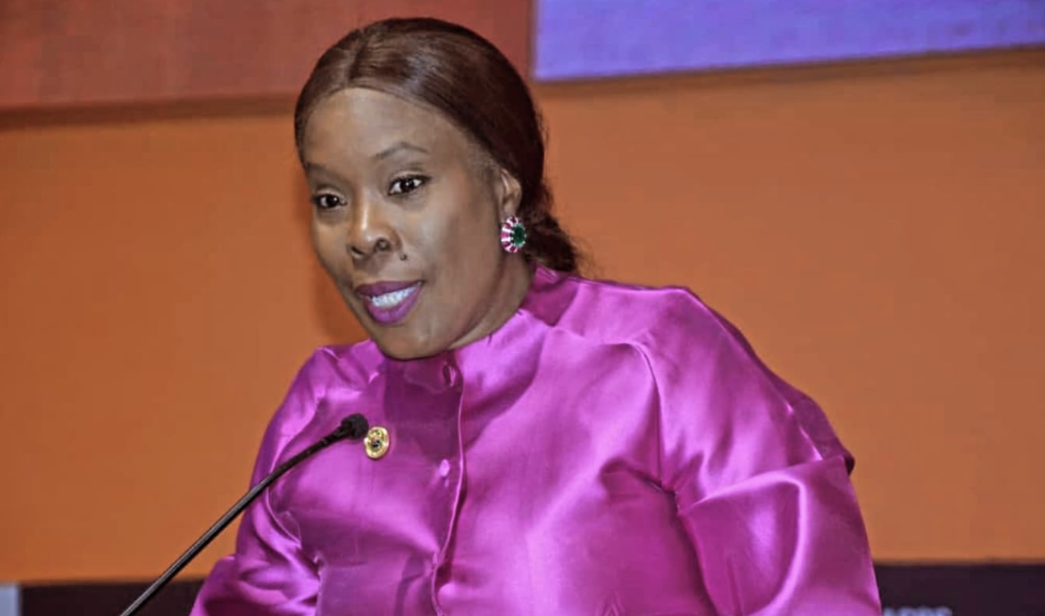

Lagos State will launch its Industrial Policy (2025–2030) on Thursday, outlining a strategy to position the state as Africa’s leading industrial and manufacturing hub.
Mrs Folashade Ambrose-Medebem, the Commissioner for Commerce, Cooperatives, Trade and Investment, disclosed this at a press conference in Alausa, Ikeja, on Monday.
She said the policy reflected months of stakeholder consultations, data-driven analysis and alignment with global best practices in industrial planning and sustainable economic growth.
Ambrose-Medebem described the document as the most ambitious industrial agenda ever conceived by the Lagos State Government in recent history.
“Within 72 hours, Lagos will launch its Industrial Policy 2025–2030, committing stakeholders to a coherent and actionable plan for industrial transformation,” she said.
She noted that the policy provided a clear roadmap for economic diversification, reduced import dependence and increased value addition across critical sectors of the state’s economy.
Ambrose-Medebem said the initiative was driven by Gov. Babajide Sanwo-Olu’s leadership and aligned with his THEMES Plus development agenda.
“The governor insists on strategic planning, disciplined execution and strong public-private collaboration as foundations for sustainable prosperity,” she said.
She added that policy continuity and institutional coordination would be prioritised to ensure that implementation remains consistent beyond political cycles.
The commissioner noted that Lagos remained Nigeria’s economic backbone, contributing significantly to industrial output, trade expansion and non-oil revenue generation.
“Lagos remains West Africa’s financial and commercial hub, with over 20 million people engaged in daily economic activities,” Ambrose-Medebem said.
She said the state’s large population, coastal advantage and entrepreneurial culture positioned it uniquely for industrial expansion and regional economic leadership.
According to her, the policy targets agro-processing, manufacturing, creative economy, healthcare, blue economy and digital trade as priority sectors.
She explained that these sectors were selected based on their job creation potential, export capacity and ability to stimulate inclusive and sustainable growth.
“The policy addresses constraints to industrial growth, with timelines to tackle infrastructure, regulatory and supply chain challenges,” she said.
Ambrose-Medebem emphasised that small and medium-sized enterprises would play a central role in achieving the policy’s objectives.
“SMEs remain our economic backbone; we are expanding finance access, removing bottlenecks and boosting competitiveness,” she said.
She said targeted interventions would include easier access to credit, improved regulatory processes and capacity-building programmes for entrepreneurs.
The commissioner stated that innovation, technology adoption and human capital development would drive the policy’s implementation across all sectors.
“We are building a workforce for a digital, knowledge-driven industrial future through skills development and institutional partnerships,” she said.
She added that collaboration with academic institutions and private organisations would strengthen research, innovation and workforce readiness.
Ambrose-Medebem noted that sustainability had been embedded within the policy framework to ensure environmentally responsible industrialisation.
“Our industrial expansion will align with cleaner production and global environmental standards for long-term sustainability,” she said.
She disclosed that implementation had already commenced through several flagship programmes initiated by the state government.
“The N10 billion LASG-BoI MSME financing initiative is underway, with initial disbursements expected within weeks,” she said.
Ambrose-Medebem said the funding programme would be delivered through cooperatives to ensure wider reach and effective monitoring of beneficiaries.
She also highlighted progress on the Imota Light Industrial Park as a key infrastructure component supporting industrial growth.
“The park will provide affordable, purpose-built facilities, improving efficiency and reducing production costs,” she said.
She noted that the facility would particularly benefit small and medium manufacturers seeking access to modern industrial infrastructure.
Ambrose-Medebem announced the Invest in Lagos Summit 3.0 scheduled for June 8 and June 9.
The summit will attract global investors and showcase the policy to secure investment commitments,” she said.
She said the event would further strengthen Lagos’ visibility as a competitive destination for foreign direct investment and strategic partnerships.
The commissioner confirmed that the official policy launch would hold on April 30 at Lagos Continental Hotel, Victoria Island.
“The event will convene investors, industry leaders and partners to unveil the policy framework and implementation strategy,” she said.
She urged journalists to play a critical role in promoting transparency, accountability and informed public discourse around the policy.
“The media is a vital bridge between government and the public, and we rely on accurate, critical reporting,” she said.
Ambrose-Medebem reaffirmed the government’s commitment to inclusive industrial growth that benefits all segments of the population.
“Our goal is a Lagos where industries thrive, businesses scale and citizens access meaningful employment,” she said.
She emphasised that the policy would prioritise job creation, youth empowerment and improved living standards across the state.
Ambrose-Medebem invited stakeholders, investors and development partners to actively participate in the policy launch and implementation process.
“We encourage active engagement to realise Lagos as Africa’s industrial hub,” she said.

NIGERIA DECIDES

 Davido's Net Worth & Lifestyle
