
Health
Ebola: Nigeria monitors 52 contacts as Kenya releases 20 from quarantine

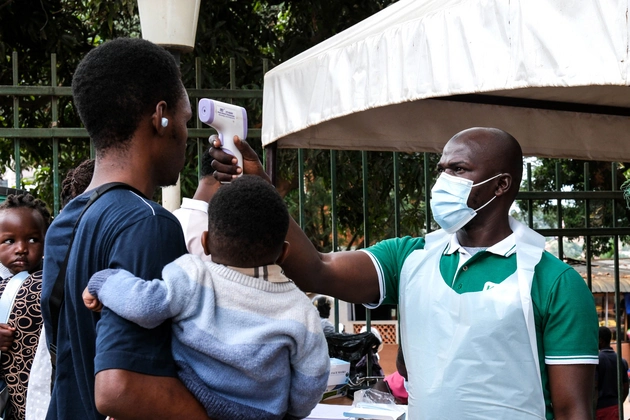

World Health Organisation (WHO) says Nigeria will continue monitoring 52 contacts after the government confirmed the evacuation of first imported Bundibugyo Ebola case to Switzerland following significant clinical improvement.
Nigeria currently has no Ebola cases following the medical evacuation of the patient, the country could declare the end of the outbreak Dec. 7, if no further confirmed or probable cases are detected and the countdown is validated by health authorities.
WHO, however, said in a statement on Monday that 20 contacts linked to Kenya’s first imported case of Bundibugyo virus disease had been released from quarantine after completing the mandatory 21-day monitoring period, while Nigeria continued to monitor the identified contacts.
Nigeria confirmed its first imported case of Bundibugyo Ebola Virus disease on Oct. 20, following laboratory confirmation of infection in a woman with a recent travel history to Uganda
The woman and a contact, her husband, were medically evacuated to Switzerland on Monday, according to the Nigerian Coordinating Minister of Health and Social Welfare, Prof. Muhammad Pate.
Pate said the evacuation was approved by him and carried out early on Monday, with the patient accompanied by her spouse, also a Swiss citizen, who remained asymptomatic.
On Oct. 23, Pate said genomic analysis showed that the virus isolated from the Nigerian patient appeared closely related to that identified in the index case in Kenya.
According to WHO, a total of 98 contacts now remain in quarantine in Kenya.
The contacts discharged on Monday remained asymptomatic throughout their quarantine. They underwent standard protocols, including a final health assessment, counselling on post-discharge precautions and follow-up where required, before being released.
“We ask communities to welcome them home warmly,” Dr Patrick Amoth, Director General for Health in Kenya.
“Having completed 21 days without symptoms, they pose no risk of infection to anyone.”
Following confirmation of the first Ebola case on October 6, 2026, the Ministry of Health conducted robust contact tracing of anyone who may have been exposed.
By October 22, all 135 contacts were traced, both in Kenya and internationally, and placed in quarantine.
As of October 26, 2026, eight contacts had developed symptoms and were confirmed positive for Ebola through laboratory testing.
All eight cases were already in quarantine at the time and were immediately transferred to the country’s Ebola treatment centre in Nairobi.
In total, Kenya has reported nine confirmed cases and two deaths. All nine cases are part of one connected group and there is no evidence that the virus has spread to the community.
“People who complete quarantine have helped protect their families, their communities and the whole country,” Dr Neema Rusibamayila Kimambo, WHO Representative to Kenya, said.
“WHO commends the Ministry of Health, the Kenya National Public Health Institute, national and county health teams for their work in responding quickly to every new case.”
While there is no licensed vaccine or specific treatment for Bundibugyo virus disease, detecting cases early and providing supportive care improves chances of recovery.
WHO advises against travel restrictions and recommends evidence-based public health measures, including entry and exit screening at points of entry, surveillance and contact tracing.


NIGERIA DECIDES

 Davido's Net Worth & Lifestyle

