
BUSINESS
Food prices: Farmers blame fuel price hike

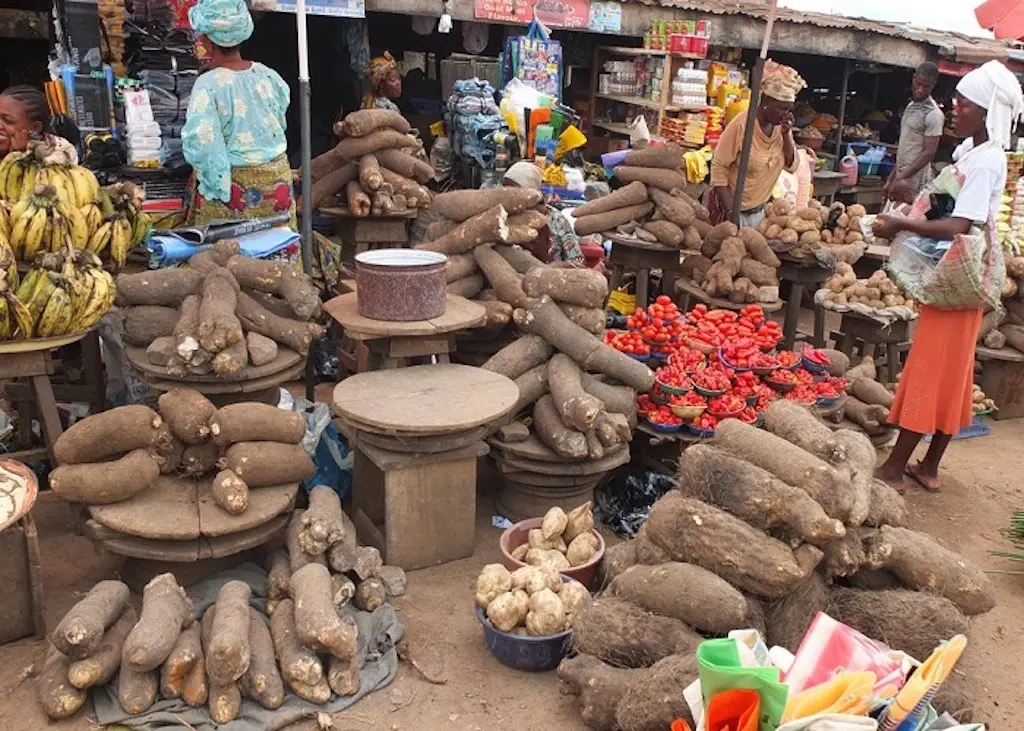

Some farmers’ associations in Lagos have blamed rising food prices on the recent increase in fuel prices.
The associations expressed their concerns in separate interviews with our reporter on Thursday in Lagos.
The Lagos State Chairman, All Farmers Association of Nigeria (AFAN), Mr Sakin Agbayewa, said fuel prices affected every sector due to over-reliance on the oil sector.
Agbayewa said any increase in fuel prices would affect agriculture, particularly the cost of inputs, transportation and other farming activities.
“The situation in Nigeria today is that every sector is predominantly dependent on fuel prices. So any shift in oil markets will pose problems for agriculture.
“When fuel prices increase, every other commodity increases in price. But when fuel prices drop, commodity prices remain the same.
“The increase in fuel prices is posing a threat to our food security as the hike affects food costs.
“When there’s another shift, like the price comes down, you expect them to bring the price down, but they will not.
“That’s why we say if the foundation is faulty, what can the righteous do? Everything is reliant on the forces of fuel prices,” Agbayewa said.
He said the fuel price hike was affecting commodities prices, including the cost of agricultural inputs.
“It is fuel we need to power the vehicles to transport seedlings and fertilisers. Fuel is also needed to move commodities from farmland to the market.
“By the time you calculate all this together, someone is going to bear the extra cost of production due to the fuel price hike, and that is the consumer.
“From harvesting, storage and transportation to the entire value chain, the costs all come down to the consumer.
“So whatever we do, the fuel price hike is a major problem. The fuel hike is affecting us across the board,” he said.
Agbayewa said the price of petrol had risen to about N1,400 per litre in some locations, with prices ranging from N1,390 to N1,395 in others.
“Automatically, there is an increase in transportation costs. The irony of the whole thing is that we are our own enemy,” he said.
The AFAN chairman, however, blamed some unscrupulous Nigerians for exploiting fuel price increases to raise food prices indiscriminately.
“Yes, I agree that there is a hike in fuel price, which we agree is tantamount to a hike in transportation costs.
“Now the question is this. Are you telling me that the agro-produce you are transporting from Ifo to Sango is charged per bag?
“Nigerians just like exploiting situations. The situation is not meant to be that bad, but the human factor is exploiting the price increase.
“We are exploiting that gap. We are exploiting that window. So, that is why you have 100 large cobs in a sack and you want to sell each one with a 100 per cent profit margin.
“Aside from this, the current reality is that the shift in petroleum prices is affecting us negatively.
“And that is very serious because I think that is on us,” he said.
On her part, the National President, Egg Sellers and Distributors Association of Nigeria, Mrs Olaide Graham, said the fuel price hike had almost crippled egg businesses in the state.
“We don’t even know what to say right now because the price of fuel is on the increase, and we don’t really know how to handle that.
“Customers are complaining. We are not making any profits because of the increase in fuel prices.
“So, everything is on the products we are buying. We are forced to bring down our prices so consumers can afford eggs.
“In the past, we used N250 to transport eggs per crate, but now it costs almost N400 per crate.
“And the farm-gate price of N5,500 per crate is not really achievable. We don’t want to go above that.
“We don’t even know what to do right now. This calls for government intervention.
“Because the wear and tear of the vehicle is there, and now the fuel price hike, this is not beyond us,” Graham said.
According to her, the most painful thing was that customers were not ready to listen because their purchasing power was also affected.
“Eggs are still the cheapest protein the ordinary man can afford. Even as the price is a little bit higher, it’s still the cheapest,” she said.
It was reported that the National Bureau of Statistics showed that Nigeria’s food inflation rate dropped to 19.57 per cent year-on-year in August 2026.
This marks a decrease from the 20.31per cent recorded in July 2026.


NIGERIA DECIDES

 Davido's Net Worth & Lifestyle
